
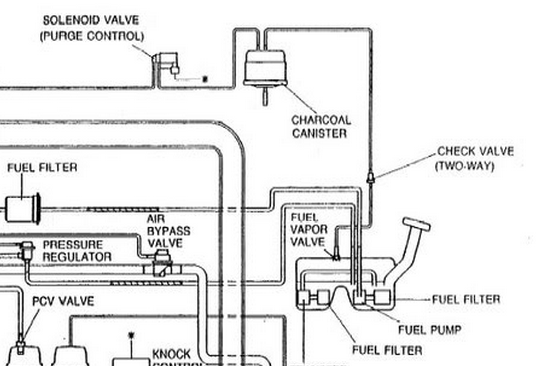
The primary benefits of an EVAP delete include eliminating complex, failure-prone emissions components, decluttering the engine bay for custom builds or engine swaps, preventing carbon canister debris from destroying the intake tract, and saving hundreds of dollars in dealership diagnostic and replacement fees for persistent OBD-II codes like P0440, P0442, or P0455.
For decades, automotive manufacturers have installed Evaporative Emission Control (EVAP) systems to capture and recirculate raw fuel vapors from the gas tank back into the engine to be burned. While environmentally beneficial, these systems degrade rapidly with age, leading to dry-rotted vacuum lines, cracked charcoal canisters, and seized purge valves.
For track enthusiasts, project car builders, and budget-conscious owners of older vehicles, deleting this system offers a permanent, cost-effective solution to a notoriously finicky system.
In this comprehensive guide, we will break down the real-world benefits of performing an EVAP delete, explain how to execute the modification safely without destroying your fuel tank, and address the legal and mechanical realities of removing these emissions components.
What Are the Real Benefits of an EVAP Delete?
The real-world benefits of an EVAP delete focus on engine bay simplification, the elimination of costly diagnostic headaches, and protecting the engine from charcoal canister debris. While an EVAP delete does not yield direct horsepower gains, it removes a web of fragile plastic lines, solenoids, and brackets that clutter the engine bay and create hard-to-find vacuum leaks.
For anyone who has spent hours chasing a microscopic leak with a smoke machine, only to find a rusted fuel filler neck or a hairline crack in a plastic canister buried above the rear subframe, the appeal of an EVAP delete is immediately clear. Dealerships regularly quote between $600 and $1,200 to replace these non-essential components, making a delete an attractive alternative for older, high-mileage vehicles.
1. Decluttering the Engine Bay for Swaps and Custom Builds
If you are dropping an LS engine into a Mazda Miata, or K-swapping an older Honda Civic, space is at an absolute premium. The OEM EVAP system includes bulky charcoal canisters, purge solenoids, leak detection pumps, and feet of routing hoses that span from the fuel tank to the intake manifold. Removing these components cleans up the engine bay, simplifies wiring harnesses, and makes routine maintenance on other engine components significantly easier.
2. Eliminating Persistent, Hard-to-Diagnose Vacuum Leaks
Because the EVAP system operates by drawing fuel vapors directly into the intake manifold via a purge valve, any failure in the system’s plumbing introduces unmetered air into the engine. This leads to rough idling, erratic fuel trims, and lean codes (such as P0171 or P0174). Deleting the system and plugging the vacuum port on the intake manifold permanently seals off this potential leak source, stabilizing your idle and engine vacuum.
3. Preventing Carbon Pellet Contamination
This is a massive, under-reported issue on older Toyota, Subaru, and Volkswagen platforms. Over time, the internal baffles of the charcoal canister degrade, allowing thousands of tiny activated carbon pellets to escape into the vacuum lines.
These pellets travel forward, clogging the purge solenoid, jamming it wide open, and even migrating into the intake manifold or engine cylinders. An EVAP delete completely eliminates this catastrophic failure mode.
4. Weight Reduction and Simplified Maintenance
While not a massive weight savings, removing the charcoal canister, brackets, lines, and valves can shave 5 to 15 pounds off the vehicle, often located behind the rear axle. More importantly, it simplifies the vehicle’s mechanical footprint. Fewer parts mean fewer points of failure, which is highly desirable for dedicated track cars, drift missiles, and off-road rigs.
Is an EVAP Delete Legal and Will It Pass Inspection?
No, an EVAP delete is not street-legal in any jurisdiction that enforces emissions testing, and it will cause your vehicle to fail both visual and OBD-II readiness inspections. Under federal law in the United States, tampering with or removing any emissions control device is illegal for vehicles driven on public highways.
If your local municipality requires annual or biennial vehicle inspections, you must understand how an EVAP delete impacts your ability to register the car. If you live in an area with no testing, or if the vehicle is a dedicated off-road/track car, these restrictions may not affect you.
The Visual Inspection Hurdle
In states like California (CARB) or New York, inspectors perform a rigorous visual check of the engine bay and undercarriage. They look specifically for the presence of the charcoal canister, the purge valve, and the correct routing of emissions hoses. If these components are missing, or if vacuum lines are capped off with brass plugs or vinyl caps, the vehicle will receive an automatic visual fail, regardless of whether the Check Engine Light is on.
OBD-II Readiness Monitors and ECU Tuning
Modern vehicles (1996 and newer) utilize the OBD-II protocol to self-test emissions systems. The ECU runs an “EVAP Monitor” under specific driving conditions (usually between 1/4 and 3/4 tank of fuel during steady highway cruising). If you delete the hardware, the ECU will immediately trigger a Check Engine Light (CEL) for codes such as:
- P0440: Evaporative Emission Control System Malfunction
- P0442: EVAP System Leak Detected (Small Leak)
- P0455: EVAP System Leak Detected (Gross Leak)
- P0443: EVAP Purge Control Valve Circuit Malfunction
Simply clearing these codes with a scanner will not work; the codes will return as soon as the drive cycle completes. To bypass this, the vehicle’s Engine Control Unit (ECU) must be custom-tuned to disable the EVAP readiness monitor and suppress the associated Diagnostic Trouble Codes (DTCs). Even with a tune, some state inspection computers can detect that the monitor has been forced into a “Ready” or “Disabled” state, resulting in a failure.
How to Perform a DIY EVAP Delete Safely
To perform a safe EVAP delete, you must plug the intake manifold vacuum port, remove the physical canisters and valves, and install a two-way rollover breather vent on the fuel tank’s vent line. The most common mistake DIYers make is completely capping off the fuel tank vent line. Doing so prevents the tank from breathing, leading to dangerous pressure build-up or a vacuum that can collapse your fuel tank.
Below is a step-by-step diagnostic and installation workflow to perform this modification correctly on most port-injected or direct-injected gasoline vehicles.
Step 1: Locate and Disconnect the Purge Solenoid
Open the hood and locate the purge valve (often called the N80 valve on VW/Audi vehicles). It is typically mounted on or near the intake manifold, with one plastic line running to the manifold and another running back toward the firewall. Unplug the electrical connector. Disconnect the vacuum line running to the intake manifold.
Step 2: Plug the Intake Manifold Port
The port on the intake manifold where the purge valve was connected must be sealed completely to prevent a massive vacuum leak. Use a high-quality silicone vacuum cap secured with a zip-tie or a spring clamp. Do not use cheap rubber caps, as they dry out, crack, and leak within six months due to engine heat.
Step 3: Address the Purge Valve Wiring (The Resistor Trick)
If you are not immediately tuning the ECU to delete the codes, the computer will detect that the purge valve solenoid circuit is open, triggering an immediate CEL. On older OBD-1 and early OBD-2 vehicles, you can trick the ECU by inserting a resistor into the harness connector. Typically, a 330-ohm, 10-watt resistor or a 100-ohm, 5-watt resistor (depending on the vehicle make) bridged across the two terminals of the plug will mimic the resistance of the solenoid coil, preventing the circuit code.
Step 4: Remove the Charcoal Canister and Vent the Tank
Locate the charcoal canister under the rear of the car, near the fuel tank. Disconnect the lines leading to it. You will find three main lines:
- The line coming from the fuel tank (tank vent).
- The purge line running to the front of the car (which you can now pull out or cap off).
- The atmospheric vent line (often routing to a high point near the filler neck).
CRITICAL SAFETY WARNING: Never cap off the line coming directly from the fuel tank. As fuel is consumed by the engine, volume decreases, creating a vacuum. Conversely, as fuel warms up, it expands and creates pressure. If the tank cannot breathe, it will either implode or balloon, destroying your fuel pump assembly or cracking the tank itself.
Step 5: Install a Rollover Vent Valve
To vent the tank safely, attach a length of fuel-rated hose to the tank vent line. Route this hose upward, higher than the top of the fuel tank, and install a two-way rollover vent valve.
This specialty valve allows air to enter and exit the tank under normal conditions but instantly seals shut if the vehicle rolls over, preventing fuel from spilling onto the ground. Finish the vent line with a small, cheap breather filter to prevent dirt, spiders, and moisture from entering your fuel system.
Common Symptoms of a Failing EVAP System vs. Deleting It
A failing EVAP system causes noticeable drivability issues, including hard starting after refueling, a rough idle, and persistent fuel smells, which are resolved by either a correct repair or an EVAP delete. Understanding these symptoms helps you decide whether to spend the money fixing the system or simply deleting it.
The table below outlines common EVAP failures, their diagnostic symptoms, the typical cost of OEM repair at a professional shop, and the alternative cost/effort of an EVAP delete.
| Failing Component | Symptom / Diagnostic Code | Est. OEM Repair Cost | EVAP Delete Solution |
|---|---|---|---|
| Purge Valve (Stuck Open) | Hard starting after getting gas; rough idle; rich running codes (P0443, P0172). | $150 – $350 | Remove valve, cap manifold port, tune ECU. Cost: ~$15. |
| Cracked Charcoal Canister | Gross leak codes (P0455); strong fuel odor near rear wheel well; loose carbon in lines. | $400 – $900 | Remove canister, install rollover vent valve and breather. Cost: ~$30. |
| Leak Detection Pump (LDP) | Persistent P0440/P0442 codes; electrical circuit faults. Common on Euro cars. | $300 – $600 | Remove pump, cap lines, delete code via ECU software. Cost: Variable (Tune). |
| Rusted Fuel Filler Neck | Small/Medium leak codes (P0442); fuel smell during fill-ups. Common on older Subarus/Toyotas. | $350 – $700 | Requires replacement for safety, but EVAP monitoring can be coded out to stop the CEL. |
What Are the Downsides of Deleting Your EVAP System?
The primary downsides of deleting your EVAP system are a constant smell of raw gasoline around the vehicle, potential fuel tank venting issues if done incorrectly, and the loss of street-legal status. Because you are bypassing a system designed to contain hydrocarbons, you must be prepared for the physical trade-offs of this modification.
Before pulling out your tools, consider how these drawbacks will impact your daily driving experience and where you park your vehicle.
The Raw Fuel Odor
Without a charcoal canister to scrub the vapors, the air escaping your gas tank will smell like raw gasoline. This odor is particularly strong on hot summer days, after parking the car after a long drive, or when parked inside an enclosed residential garage. If your garage is attached to your home, these fumes can migrate indoors, creating both an unpleasant smell and a potential fire hazard.
Pressure and Vacuum Management
If your DIY delete does not use a high-quality two-way vent valve, you run the risk of fuel spraying out of the vent line when the tank is completely full, or drawing moisture and dirt directly into your gas tank. Furthermore, in extreme temperatures, a poorly vented tank can cause fuel delivery issues, such as vapor lock, which starves the engine of fuel and causes stalling.
Environmental Impact
Automotive evaporative emissions account for a significant portion of ground-level ozone and smog. By deleting the EVAP system, you are venting unburned hydrocarbons directly into the atmosphere. While a single car may seem insignificant, it is a factor to keep in mind if you are environmentally conscious.
Frequently Asked Questions About EVAP Deletes
Will an EVAP delete increase my fuel mileage?
No, an EVAP delete will not improve your fuel mileage. In fact, because fuel vapors are allowed to escape into the atmosphere rather than being routed to the engine to be burned as fuel, you may experience a incredibly minor decrease in overall fuel efficiency over time, though it is usually too small to notice at the pump.
Can I perform an EVAP delete without tuning the ECU?
You can physically remove the components, but on any OBD-II vehicle (1996+), you will get a permanent Check Engine Light. On some vehicles, this can put the engine into a “limp mode” or a rich running safety map, which degrades performance. To do the delete properly, a software tune is highly recommended to turn off the diagnostic codes.
What is the difference between an EVAP delete and an EGR delete?
An EVAP delete removes components that manage fuel tank vapors. An EGR (Exhaust Gas Recirculation) delete removes the system that recirculates inert exhaust gas back into the engine cylinders to lower combustion temperatures and reduce NOx emissions. They are completely separate systems, though both are often deleted on track cars.
Why does my car struggle to start after getting gas if my EVAP is failing?
This happens because a failing purge valve gets stuck open. When you fill your gas tank, raw fuel vapors are forced out of the tank and directly into the intake manifold through the open valve. This floods the engine with raw fuel, creating an extremely rich air-fuel ratio that causes the engine to crank excessively or stumble when you try to start it immediately after refueling.
Can I use a cheap fuel cap to vent my tank instead of a rollover valve?
No, modern fuel caps are designed to seal the tank completely to maintain system pressure for OBD-II testing. Using an older style “vented” gas cap on a modern vehicle can result in fuel sloshing out of the filler neck during hard cornering or acceleration, creating a severe safety hazard.
Conclusion
An EVAP delete is a highly effective modification for simplifying your engine bay, shedding unnecessary weight on track cars, and bypassing expensive, recurring emissions system repairs on older project vehicles. By removing failure-prone solenoids, rotten vacuum lines, and degraded charcoal canisters, you eliminate potential sources of vacuum leaks and protect your engine from carbon pellet contamination.
However, this modification is not without its trade-offs. You must be prepared to manage the smell of raw fuel vapors, invest in proper ECU tuning to disable the Check Engine Light, and accept that the vehicle will no longer be street-legal in areas with strict emissions inspections. If you proceed, always ensure you install a high-quality two-way rollover vent valve to protect your fuel tank’s structural integrity and keep your vehicle operating safely on the track or trail.
Leave a Reply