
What Causes the BMW Parking Brake Malfunction Warning to Come On?
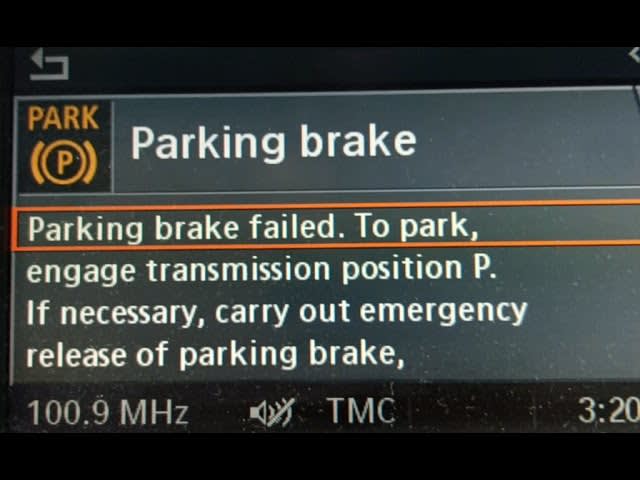
A BMW parking brake malfunction warning usually means the electronic parking brake (EPB) system has detected a fault in the actuator motor, brake pad wear sensor, or the control module. You can reset it by holding the parking brake button down for 15-20 seconds, disconnecting the battery for 10 minutes, or using a BMW-compatible OBD2 scanner to clear the fault code. If the warning returns after a reset, the underlying hardware issue must be diagnosed and repaired first.
The parking brake malfunction warning on a BMW is triggered when the EPB control module detects an inconsistency in the system’s operation. This can range from a simple electrical glitch to a seized actuator motor or worn-out brake shoes on the rear axle. Unlike older mechanical handbrake systems, BMW’s electronic parking brake relies on motors, sensors, and software working together, so any weak link brings the whole system down.
Most Common Causes at a Glance
- 🔧Worn or contaminated rear brake shoes — the EPB uses a separate set of shoes inside the rear rotor hat on most models
- 🔧Seized or failing EPB actuator motor — one or both rear caliper-mounted motors fail to engage or release
- 🔧Weak or dying battery — voltage drops below the threshold the EPB module needs to operate correctly
- 🔧Brake pad wear sensor tripped — rear pad wear can cascade into an EPB fault
- 🔧Corroded or damaged wiring harness — especially on older F-series and E-series cars driven in salt-belt states
- 🔧Software glitch in the EPB module — more common after a battery replacement or jump start
- 🔧Moisture intrusion in the actuator — rubber seals degrade over time on high-mileage cars
Every week I see at least two or three BMWs come in with this warning. Half the time the owner has been quoted $1,200+ at the dealer for actuator replacement when all they actually need is a $40 set of brake shoes or a simple module reset. Always diagnose before you authorize repair.
How Do You Reset the BMW Parking Brake Malfunction at Home?
You can attempt a parking brake malfunction reset at home using three methods: the manual button reset, a battery disconnect reset, or an OBD2 scanner reset. The method that works depends on whether the fault is a software glitch or an actual hardware failure.
Method 1: Manual Button Reset
- Sit in the driver’s seat with the ignition on (engine does not need to be running, but the car must be in “on” position)
- Make sure the vehicle is in Park (automatic) or in gear (manual)
- Press and hold the parking brake button in the UP (engaged) position for 15 to 20 seconds
- Release the button, then press and hold it in the DOWN (released) position for 15 to 20 seconds
- Turn the ignition off, wait 30 seconds, then restart
- Check if the warning has cleared from the instrument cluster
This method works for temporary software glitches, especially after a jump start or battery replacement. If the warning comes back within a few drives, you have a hardware problem that needs attention.
Method 2: Battery Disconnect Reset
- Open the trunk and locate the battery (in the trunk on most BMW sedans and SUVs)
- Disconnect the negative (black) terminal first using a 10mm wrench
- Disconnect the positive (red) terminal
- Touch both cable ends together away from the battery for 30 seconds to drain residual charge from the capacitors
- Wait a full 10 minutes with the battery disconnected
- Reconnect the positive terminal first, then the negative
- Turn the ignition on and cycle the parking brake button through a full engage and disengage cycle
⚠️ Be warned: disconnecting the battery on newer G-series BMWs (2019+) will trigger a battery registration warning and may require ISTA or BimmerLink to register the new or existing battery. Also, your one-touch windows and sunroof may need to be re-initialized after a battery disconnect.
Method 3: OBD2 Scanner Reset
- Plug a BMW-compatible OBD2 scanner into the port under the dashboard on the driver’s side
- Navigate to the Chassis or Body module section
- Select the EMF (Electromechanical Parking Brake) or EPB module
- Read the fault codes and note them down before clearing
- Clear the fault codes and perform a service reset / actuator test if the scanner supports it
- Cycle the parking brake to verify proper operation
Affordable scanners that work well for this include the Foxwell NT510 Elite, Autel AP200, and the BimmerLink app with a compatible OBD adapter. You do not need the dealer’s ISTA system for basic resets.
BMW Parking Brake Malfunction by Model and Generation
Different BMW generations use different EPB architectures, and the fix varies significantly depending on your model. Here is a breakdown by chassis generation.
E-Series (2006-2013): E60, E90, E70, E71, etc.
E-series BMWs use a drum-in-hat style parking brake with two actuator motors mounted on the rear calipers. The most common failure point on these cars is the actuator motor itself, which corrodes internally, especially in humid or salt-belt climates. The second most common issue is the parking brake shoes crumbling or delaminating from the backing plate.
- ✅Fix: Replace both actuator motors as a pair — they are sold individually and run $80 to $150 each aftermarket
- ✅Fix: Replace the parking brake shoe kit (includes shoes, springs, and hardware) — $30 to $60 for the kit
- 💡Tip: Always check the rotor hat for scoring before reassembly; deep grooves mean the shoes were dragging and the rotor may need replacement
F-Series (2012-2019): F30, F10, F15, F06, etc.
F-series BMWs moved to a fully integrated EPB caliper design where the actuator motor is built into the rear caliper assembly. These are more reliable than E-series units, but when they fail, the repair cost is higher because you may need to replace the entire caliper assembly if the motor cannot be sourced separately.
- ✅Fix: Try replacing just the EPB motor first — some F-series motors are available separately for $100 to $200
- ✅Fix: If the caliper piston is seized, replace the full rear caliper assembly — $300 to $600 per side aftermarket, $800+ OEM
- 💡Tip: F-series cars are notorious for brake drag after EPB motor replacement. Always retract the piston using a scanner before caliper work, not by hand
G-Series (2019-Present): G20, G01, G05, G22, etc.
G-series BMWs use a more advanced EPB system with better diagnostics and redundancy. However, these cars are extremely sensitive to battery voltage.
The number one cause of phantom parking brake warnings on G-series cars is a battery that is dying but has not yet failed completely. The EPB module will throw a fault before the car throws a battery warning.
- ✅Fix: Test the battery with a load tester — if it reads below 12.2V at rest or drops below 10V under load, replace it
- ✅Fix: Register the new battery using BimmerLink or ISTA after replacement
- ✅Fix: If the battery tests good, use ISTA to run the EMF actuator test function to isolate the failed component
- 💡Tip: G-series EPB faults sometimes require a software update from the dealer — ask about SIB (Service Information Bulletin) updates before authorizing parts replacement
How Much Does a BMW Parking Brake Malfunction Repair Actually Cost?
The cost varies wildly depending on the root cause and whether you go to a dealer or an independent shop. Here is a realistic breakdown based on what owners actually pay, not what the dealer quotes upfront.
Can You Drive With a BMW Parking Brake Malfunction Warning?
You can usually drive short distances with a parking brake malfunction warning, but you should not make it a habit. The vehicle will still brake normally with the foot brake since the EPB system is separate from the service brakes. However, if the parking brake is stuck in the engaged position, driving will destroy the rear brake shoes, overheat the rotors, and potentially damage the actuator motors permanently.
- ⚠️Warning light solid (amber): Drive carefully to a safe location or repair shop; do not park on hills without wheel chocks
- 🚨Warning light flashing (red) with chime: Do not drive; the system detected a critical fault and the brake may be stuck engaged
- ⚠️No warning but brake won’t engage: Do not rely on putting the car in Park alone; use wheel chocks every time you park
Frequently Asked Questions About BMW Parking Brake Malfunction
Why does my BMW parking brake malfunction appear after replacing the battery?
When you disconnect the battery on a BMW, the EPB module loses its stored calibration data. The module does not know the exact position of the parking brake actuators, so it throws a fault as a safety measure.
Cycling the parking brake button through a full engage and release cycle after the battery replacement usually re-teaches the module. If the warning persists, use a scanner to clear the stored fault codes.
Does the BMW parking brake use the same pads as the regular brakes?
No, on E-series and most F-series BMWs, the parking brake uses a separate set of shoes that sit inside the hat of the rear brake rotor, similar to a drum brake. These shoes only activate when the parking brake is engaged. On some G-series models with integrated EPB calipers, the parking brake reuses the rear brake pads and does not have separate shoes.
How do I manually release a stuck BMW parking brake?
On most BMWs, you can access the emergency manual release by removing the rear seat or trunk liner to find a release cable or bolt near each rear caliper. Refer to your owner’s manual for the exact location. On E-series models, there is typically a T40 or T45 Torx bolt on the back of the actuator that can be turned manually to retract the mechanism.
Why does the parking brake malfunction warning only appear in cold weather?
Cold weather causes moisture inside the EPB actuator motors to freeze, which increases resistance and makes the motor struggle to complete its stroke. The module detects the higher-than-expected current draw and throws a fault.
If this happens consistently in winter, the actuator seal is likely degraded and allowing moisture in. Replacing the actuator or resealing it with weatherproof grease is the permanent fix.
Can a low tire pressure warning trigger a parking brake malfunction?
Not directly, but if the tire pressure difference between the left and right rear tires is large enough, the stability control module can send conflicting signals to the EPB module, triggering a cascade fault. Always check and correct tire pressures before diagnosing an EPB issue on BMWs equipped with run-flat tires, as these are more prone to slow leaks.
Do Not Let a Dealer Overquote You — Diagnose First, Replace Second
The single most important thing to remember with a BMW parking brake malfunction is that the warning alone does not tell you which component failed. A $50 scanner readout can save you from a $1,500 unnecessary dealer repair.
Always read the fault codes before agreeing to any parts replacement. In the majority of cases, the fix is far simpler and cheaper than what the dealership quote suggests.
Start with the cheapest possibilities — battery voltage, a simple reset, and a visual inspection of the rear brake shoes — before moving to actuator or module replacement.
Leave a Reply