
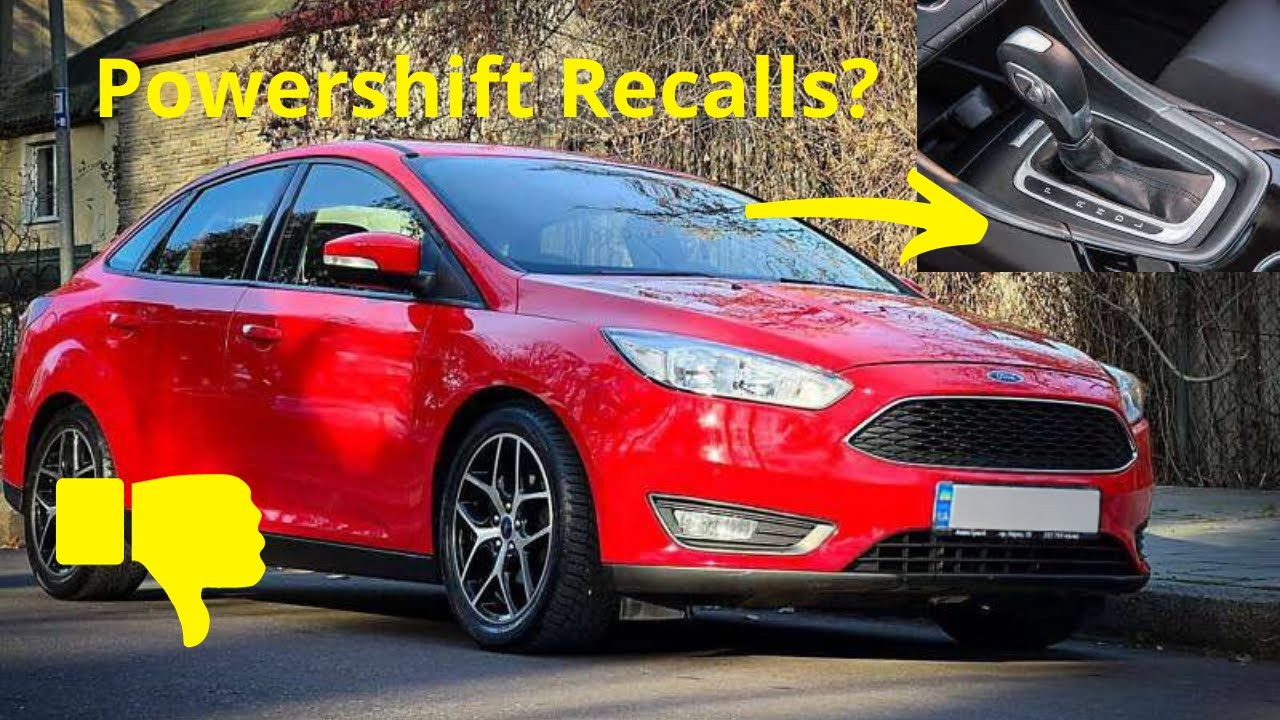
Ford issued multiple recalls and extended warranties for the 2011–2016 Ford Focus and 2011–2016 Ford Fiesta equipped with the DPS6 PowerShift dual-clutch automatic transmission. The transmission suffered from shuddering, hesitation, jerking, and premature clutch wear due to a flawed dry-clutch design and faulty transmission control module (TCM). If your vehicle is affected, you may qualify for a free TCM replacement, clutch repair, or buyback under settlement terms.
What Ford Focus Transmission Recall Was Issued and Which Years Are Affected?
Ford recalled and extended coverage on Focus models from 2012 through 2016 equipped with the DPS6 dual-clutch automatic transmission. The 2011 model year is also included in many service actions depending on the build date. Ford issued several technical service bulletins (TSBs) and at least one formal recall for the transmission control module.
The recall specifically targeted the TCM software and hardware, which caused erratic shifting behavior. Separately, Ford extended the clutch warranty to 7 years or 100,000 miles on many affected vehicles.
The PowerShift transmission was fundamentally flawed by design, and Ford never truly fixed the root cause before discontinuing it.
Affected Model Years at a Glance
Why Does the Ford Focus PowerShift Transmission Shudder and Jerk?
The shudder and jerking in the Ford Focus DPS6 transmission is caused by the dry dual-clutch design itself, which was never suited for everyday stop-and-go driving. Unlike wet-clutch systems used by most competitors, the dry-clutch configuration generates excessive heat and wears unevenly under normal commuting conditions.
This fundamental design flaw means no software update can permanently solve the problem.
When the clutch plates wear unevenly, the TCM tries to compensate by adjusting clutch engagement points, which causes the jerking and hesitation many owners experience. Contaminated clutch dust from premature wear further degrades performance over time.
Ford attempted multiple software recalibrations, but owners consistently reported the problems returning within weeks or months of each reflash.
Main Causes Behind the Shuddering
- 1Uneven clutch disc wear: The dry-clutch plates develop hot spots and glazing, causing grab-and-slip cycles during engagement that feel like a shudder or vibration.
- 2Contaminated friction material: Worn clutch material creates dust that coats the clutch assembly and input shaft, making smooth engagement nearly impossible.
- 3Faulty Transmission Control Module (TCM): The TCM misinterprets clutch position data and applies incorrect pressure, leading to harsh shifts and hesitation. Many TCM units failed entirely and left the vehicle undrivable.
- 4Seal and actuator leakage: Hydraulic actuator seals can leak over time, reducing pressure needed for proper clutch engagement and causing delayed or erratic shifts.
- 5Input shaft bearing wear: Some transmissions develop bearing noise and play, which amplifies vibration through the drivetrain at low speeds.
What Recalls and Lawsuits Were Filed for the Ford Focus Transmission?
Ford faced a major class-action lawsuit in 2017 that resulted in a settlement covering approximately 1.9 million vehicle owners. The settlement offered buybacks, cash payments, and extended warranties depending on the number of repair attempts on file. Separately, NHTSA opened investigations that led to recalls for the TCM and related components.
Key Recalls and Actions
- 🔷 Recall 14M02: Extended transmission clutch warranty to 7 years/100,000 miles for 2011–2015 Focus models with DPS6 transmission.
- 🔷 Recall 16B30: TCM software update addressing erroneous shift patterns and false diagnostic trouble codes.
- 🔷 Recall 16M02: Further extended warranty on both the clutch assembly and the TCM for 2012–2016 models.
- 🔷 Class-Action Settlement (2017): Covered 2011–2016 Focus and 2011–2016 Fiesta. Options included repurchase, trade-in assistance, or cash compensation depending on repair history.
- 🔷 NHTSA Complaint Volume: Over 4,000 complaints were filed with the National Highway Traffic Safety Administration regarding PowerShift transmission failures across Focus and Fiesta models.
How Do I Know If My Ford Focus Is Covered Under the Recall?
You can check recall coverage by entering your Vehicle Identification Number (VIN) on the NHTSA recall lookup website or Ford’s owner portal. The VIN is located on the driver’s side dashboard visible through the windshield and on the door jamb sticker.
If your vehicle had the DPS6 transmission and falls within the affected production dates, it likely qualifies for at least the extended warranty coverage.
Keep in mind that some service actions are classified as Customer Satisfaction Programs (CSPs) rather than formal recalls, which means they may not show up on NHTSA’s recall page. Always contact your local Ford dealership with your VIN to confirm every applicable program on your specific vehicle.
Many owners have discovered additional coverages by calling Ford Customer Relationship Center directly at 1-800-392-3673.
Steps to Verify Your Coverage
- 1Locate your 17-character VIN from the dashboard or door jamb.
- 2Visit nhtsa.gov/recalls and enter your VIN in the search field.
- 3Visit ford.com/support/recalls and enter your VIN for Ford-specific programs.
- 4Call your local Ford dealership’s service department and ask them to run a VIN-specific campaign report.
- 5Call Ford Customer Relationship Center at 1-800-392-3673 if you believe you are owed coverage not reflected in the system.
What Are the Symptoms of a Failing TCM on a Ford Focus?
A failing TCM on the Ford Focus typically presents with erratic shifting, dashboard warning lights, and in many cases, the vehicle entering limp mode or failing to move at all. The most common warning is the transmission overheating message or the wrench icon illuminating on the instrument cluster.
Many owners also report that the vehicle shudders violently between first and second gear before the module fails completely.
When the TCM fails, it stores diagnostic trouble codes (DTCs) such as P07A3, P2872, P285E, and P07A4. These codes relate to clutch actuator performance and clutch A/B pressure faults.
A qualified technician with Ford’s IDS or FDRS diagnostic tool can pull these codes and confirm whether a TCM replacement is needed under the recall program.
Common TCM Failure Symptoms
- ⚠️ Transmission stuck in one gear or neutral
- ⚠️ Wrench or transmission overheating warning on dash
- ⚠️ Violent shuddering between first and second gear
- ⚠️ Delayed or absent response when shifting from Park to Drive or Reverse
- ⚠️ Engine revving without corresponding vehicle acceleration
- ⚠️ Check engine light with P07A3, P2872, or P285E codes
Can I Fix the Ford Focus Transmission Shudder Myself?
Some DIY owners have had partial success addressing the shudder by performing a clutch adaptation reset using an OBD-II scanner with Ford-specific capabilities, but this is a temporary fix at best. The underlying mechanical wear on the clutch assembly cannot be corrected through software or basic maintenance alone.
If your vehicle still falls under warranty or recall coverage, pursuing a dealer repair is the most cost-effective path.
For owners outside warranty coverage, independent transmission shops familiar with the DPS6 system can replace the clutch assembly for roughly $1,500 to $2,500 depending on labor rates and parts. Some shops offer upgraded friction material and improved seal kits that address the root causes more thoroughly than the OEM parts.
However, be cautious of shops that simply reflash the TCM without inspecting the physical clutch condition.
DIY Tips for Managing Transmission Issues
- 1Perform a clutch adaptation reset: Use a Forscan-compatible OBD-II adapter to reset the clutch learn values in the TCM. This forces the module to recalibrate clutch engagement points, which can temporarily reduce shudder for 500–1,000 miles.
- 2Check and replace transmission fluid: Although the DPS6 uses a dry clutch, there is gear oil in the transaxle housing. Ford recommends checking the fill level and condition. Degraded oil can worsen bearing and gear noise.
- 3Inspect the TCM connector: Corrosion and moisture intrusion at the TCM connector is a known issue. Cleaning the connector and applying dielectric grease can resolve intermittent communication faults.
- 4Monitor with live data: Use Forscan or a similar tool to watch clutch position sensor readings, actuator pressures, and TCM temperatures in real time. Out-of-spec readings confirm internal wear that requires mechanical repair.
What Is the Ford Focus Transmission Settlement and How Do I Claim?
The 2017 class-action settlement provided several remedies depending on the number of documented repair visits and the age of the vehicle. Owners who experienced three or more clutch replacements qualified for a buyback at a price determined by a formula based on the original purchase price and mileage.
Owners with fewer repair attempts could receive cash compensation ranging from $200 to $600 plus extended warranty coverage.
The original claims window for the settlement has closed, but some states have lemon law provisions that may still provide recourse if you purchased or leased the vehicle new.
Additionally, Ford has been known to offer goodwill repairs even outside the formal settlement window for owners who have strong documentation of repeated transmission complaints. Always keep copies of every repair order and dealership visit related to the transmission issue.
Documentation You Should Keep
- ✅ All dealership repair orders (ROs) related to transmission complaints
- ✅ Rental car receipts if the vehicle was in the shop for extended periods
- ✅ Any TSB or recall notices you received from Ford or NHTSA
- ✅ Video recordings of shuddering, jerking, or dashboard warning messages
- ✅ Correspondence with Ford Customer Relationship Center including case numbers
Frequently Asked Questions
Is the Ford Focus DPS6 transmission still under warranty in 2024?
The extended warranty for the clutch assembly covered 7 years or 100,000 miles from the original in-service date, meaning most 2012–2016 models are now outside that window. However, TCM-specific recalls remain open regardless of mileage or age on some model years. Check your VIN with a Ford dealer to confirm any remaining coverage.
Will Ford replace the entire transmission or just the clutch?
Under the extended warranty program, Ford typically replaces only the clutch assembly, seals, and actuator components rather than the entire transmission. In cases of severe internal damage or TCM failure, additional components may be covered depending on the dealer’s diagnosis and Ford’s approval.
Did Ford fix the transmission problem in later Focus models?
Ford discontinued the Focus sedan in North America after the 2018 model year and stopped offering the DPS6 transmission after 2016 on most configurations. The European-market Focus continued with a different wet-clutch dual-clutch transmission that did not experience the same widespread failures.
Ford essentially abandoned the design rather than fixing it for the North American market.
Can I still file a lemon law claim for my Ford Focus?
Lemon law eligibility varies by state and typically applies to vehicles purchased or leased new. Most state lemon laws have a statute of limitations ranging from 1 to 4 years from the purchase date. If your vehicle was a late 2016 or 2017 model and you have extensive repair documentation, consult a lemon law attorney in your state to evaluate your case.
What happens if my Ford Focus transmission fails while driving?
If the TCM fails while driving, the vehicle may lose drive power suddenly and coast to a stop. The dashboard will display a transmission fault or overheating warning.
Pull over safely, turn off the engine, wait 60 seconds, and attempt to restart. If the vehicle enters limp mode, you may be able to drive slowly to a safe location.
Have the vehicle towed to a Ford dealership for diagnosis rather than continuing to drive it, as repeated attempts to operate a failing transmission can cause additional damage to internal components.
Owners of affected Ford Focus models should not accept a dealership telling them the shudder is normal dual-clutch behavior. It is not normal, and Ford has acknowledged the defect through multiple warranty extensions and legal settlements. Armed with your VIN, repair history, and knowledge of the applicable programs, you can push back on misdiagnosis and ensure you receive every dollar of coverage you are entitled to under Ford’s commitments.
Leave a Reply