
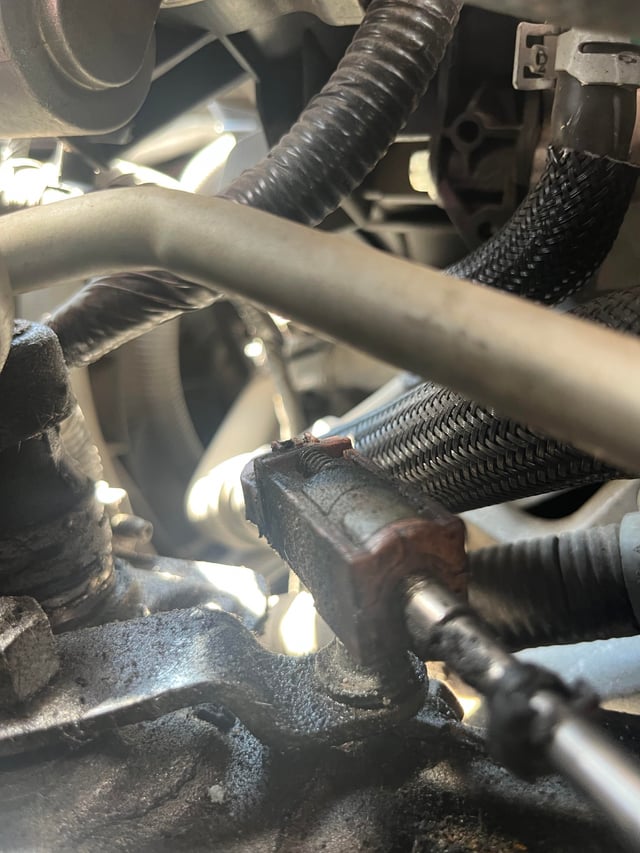
A “Shift System Fault – Service Required” message on a Ford Fusion typically means the vehicle’s electronic shift system has detected a malfunction in the shifter assembly, shift cable, transmission range sensor, brake pedal position sensor, or related wiring. The most common cause on 2013–2016 models is a worn shifter assembly or failed shift interlock solenoid, while 2017–2020 models with rotary dial shifters often suffer from electronic shifter module failure or low system voltage triggering false faults.
What Does “Shift System Fault – Service Required” Mean on a Ford Fusion?
This warning appears on the instrument cluster when the Body Control Module (BCM) or Powertrain Control Module (PCM) detects an irregularity in the shift-enable system. The car’s computer is telling you it cannot verify the shifter is operating correctly, and it may prevent the vehicle from shifting out of Park or cycling through gears normally.
On the 2013–2016 Ford Fusion, the shifter uses a physical shift cable connected to the transmission with an electronic interlock solenoid that locks the shifter in Park until the brake pedal is pressed. On 2017–2020 models, Ford switched to a fully electronic rotary dial shifter with no mechanical cable. Both systems are prone to distinct failure points, and understanding which generation you own is the first step to diagnosing it correctly.
What Causes the Ford Fusion Shift System Fault?
There are several distinct causes, ranging from cheap fixes to more involved repairs. Below is a breakdown of every known cause based on repeated real-world diagnosis.
1. Worn Shifter Assembly (2013–2016 Models)
The shifter assembly on 2013–2016 Fusions uses internal plastic bushings and a pivot mechanism that wears over time. When the bushings degrade, the shifter position does not match what the Transmission Range Sensor reads, triggering the fault. You may notice the shifter feels loose, sloppy, or does not click firmly into each gear position.
Dealerships commonly quote $600–$1,200 for full shifter assembly replacement. However, in many cases, the internal bushings alone can be replaced for under $30 in parts if you are comfortable removing the center console. Several aftermarket kits exist specifically for this repair.
2. Shift Interlock Solenoid Failure
The shift interlock solenoid is responsible for locking the shifter in Park until you press the brake pedal. When this solenoid fails—either electrically or mechanically—you will be unable to shift out of Park, and the system will log a shift system fault. You may hear a faint click or no sound at all when pressing the brake pedal while in Park.
This solenoid is built into the shifter assembly on most Fusion model years. Replacing the solenoid alone is possible but often requires sourcing the exact OEM part. On some model years, the solenoid is integrated and cannot be replaced separately, requiring full shifter assembly replacement.
3. Brake Pedal Position Sensor (Stop Lamp Switch) Failure
The brake pedal position sensor tells the shift interlock system that you are pressing the brake. If this sensor fails or sends an intermittent signal, the shift system cannot confirm the brake is applied and will throw a fault. This is one of the most commonly misdiagnosed issues—many shops replace the entire shifter when a $15–$40 brake light switch is the actual culprit.
You can test this by checking if your brake lights illuminate when the pedal is pressed. If brake lights are intermittent or do not come on at all, the stop lamp switch is likely the problem. This switch is located at the top of the brake pedal arm under the dashboard.
4. Transmission Range Sensor (TRS) Malfunction
The Transmission Range Sensor, also called the Manual Lever Position Sensor (MLPS), tells the PCM what gear the transmission is actually in. If this sensor sends conflicting data compared to the shifter position, a shift system fault is logged. Symptoms include the instrument cluster showing the wrong gear, erratic shifting behavior, or the engine not starting in Park or Neutral.
On the Fusion, the TRS is mounted on the transmission itself. Replacement requires getting under the vehicle and is typically a $150–$350 repair at an independent shop including parts and labor.
5. Electronic Rotary Shifter Module Failure (2017–2020 Models)
The 2017–2020 Fusion uses a rotary dial shifter that is entirely electronic. There is no mechanical cable.
When the rotary shifter module fails, the vehicle may not register any gear selection, or it may default to Park unexpectedly. The shift system fault warning appears immediately.
This is a more expensive repair because the rotary shifter module is a dealer-level part that typically costs $250–$500 for the part alone. Programming with a compatible scan tool is usually required after installation.
6. Low Battery Voltage or Weak Battery
This is the most overlooked cause. When the Fusion’s battery voltage drops below approximately 11.5 volts, multiple modules including the BCM and PCM can lose communication or throw false fault codes.
The shift system fault may appear along with other unrelated warnings. If the fault appeared suddenly and your battery is more than three years old, test the battery and charging system first before replacing any shift components.
7. Wiring Harness Damage or Corroded Connectors
The wiring between the shifter, BCM, TCM, and transmission can corrode or chafe, especially in regions with road salt or high humidity. A damaged wire in the shift circuit will produce intermittent or permanent faults. This requires tracing the wiring with a multimeter and is best diagnosed with a wiring diagram specific to your model year.
How to Diagnose the Shift System Fault at Home
Before spending money at a shop, you can narrow down the cause with a few simple checks. Follow these steps in order:
- Check battery voltage. Use a multimeter across the battery terminals. A healthy battery should read 12.4–12.7 volts with the engine off. Anything below 12.0 volts warrants a battery test or replacement.
- Check brake lights. Have someone stand behind the car while you press the brake pedal. If brake lights are not working or flickering, replace the stop lamp switch first.
- Scan for codes. Use an OBD-II scanner that reads BCM and TCM codes, not just engine codes. Generic code readers may miss body-module fault codes related to the shift system.
- Inspect the shifter. Move the shifter through all positions with the engine off and key in accessory mode. Feel for looseness, grinding, or positions that do not register on the instrument cluster display.
- Check the shift cable (2013–2016). Open the hood and locate the shift cable on the transmission. Check for loose mounting, disconnected cable ends, or visible damage.
- Reset the system. Disconnect the negative battery terminal for 15 minutes, reconnect, and start the vehicle. If the fault clears and does not return, it may have been a voltage-related false alarm.
Model-Year-Specific Fixes and Common Failures
| Model Year | Shifter Type | Most Common Cause | Average Repair Cost |
|---|---|---|---|
| 2013–2014 | Cable-operated console shifter | Worn shifter assembly bushings | $30 DIY / $400–$800 shop |
| 2015–2016 | Cable-operated console shifter | Shift interlock solenoid or brake light switch | $15–$40 (switch) / $200–$600 (solenoid/assembly) |
| 2017–2018 | Electronic rotary dial | Rotary shifter module failure | $250–$500 part / $400–$800 total |
| 2019–2020 | Electronic rotary dial | Module failure or low battery voltage fault | $250–$500 part / $400–$800 total |
How Dealerships and Shops Misdiagnose This Problem
Many dealerships default to replacing the entire shifter assembly whenever a shift system fault appears, even when the root cause is a simple brake light switch or low battery. This is partly because the flat-rate labor model rewards replacing complete assemblies rather than diagnosing individual components. A $40 stop lamp switch repair can easily turn into a $900 shifter assembly replacement if you do not push back.
Independent shops sometimes miss the body-module fault codes because their scan tools are configured for powertrain-only diagnosis. Always ask the shop if their equipment reads BCM and TCM codes before authorizing diagnostics.
Can You Drive with a Shift System Fault?
In most cases, the vehicle will still drive, but you may be unable to shift out of Park without using the manual shift-lock override. On 2013–2016 models, there is a small slot near the shifter where you can insert a key or flat screwdriver to manually release the shift lock. On 2017–2020 models with the rotary dial, consult the owner’s manual for the emergency shift procedure.
Driving with this fault is generally safe as long as the transmission shifts normally once you are in gear. However, leaving it unresolved can lead to being stranded if the shifter locks in Park and the override mechanism fails.
Frequently Asked Questions
Is there a recall for the Ford Fusion shift system fault?
There is no widespread recall specifically for the shift system fault warning. However, Ford has issued Technical Service Bulletins (TSBs) for shifter assembly and transmission range sensor issues on certain model years. Check with your dealer using your VIN to see if any TSBs apply to your vehicle.
Will disconnecting the battery permanently fix the shift system fault?
Disconnecting the battery resets the modules and clears stored fault codes, but it does not fix the underlying problem. If the fault is caused by a hardware failure such as a worn shifter or bad sensor, the warning will return within minutes to days. Battery disconnect only permanently resolves faults caused by a temporary voltage drop.
How much does it cost to fix a Ford Fusion shift system fault?
Costs range from $15 for a brake light switch replacement to $1,200 for a full shifter assembly replacement at a dealership. The most common real-world repair falls in the $150–$500 range depending on the root cause and whether you perform the work yourself or use a shop.
Can a bad battery cause a shift system fault on a Ford Fusion?
Yes. Low voltage below approximately 11.5V can cause the BCM and other modules to lose communication and log false fault codes including the shift system warning. Always test the battery and charging system before replacing shift-related components, especially if the battery is over three years old.
What does the shift lock override do on a Ford Fusion?
The shift lock override is a manual release mechanism that allows you to move the shifter out of Park when the electronic interlock fails. On 2013–2016 models, it is typically a small covered slot near the base of the shifter. Insert a key or small flat tool while pressing the brake pedal to release the lock.
Take Action Before It Leaves You Stranded
A Ford Fusion shift system fault is not something to ignore. Start with the simplest and cheapest checks—battery voltage and brake light function—before assuming the worst.
If you own a 2013–2016 model, inspect the shifter assembly and bushings. For 2017–2020 owners, focus on the rotary shifter module and system voltage. Knowing these common failure points saves you from overpaying at a dealership and gets your Fusion back to shifting the way it should.
Leave a Reply