
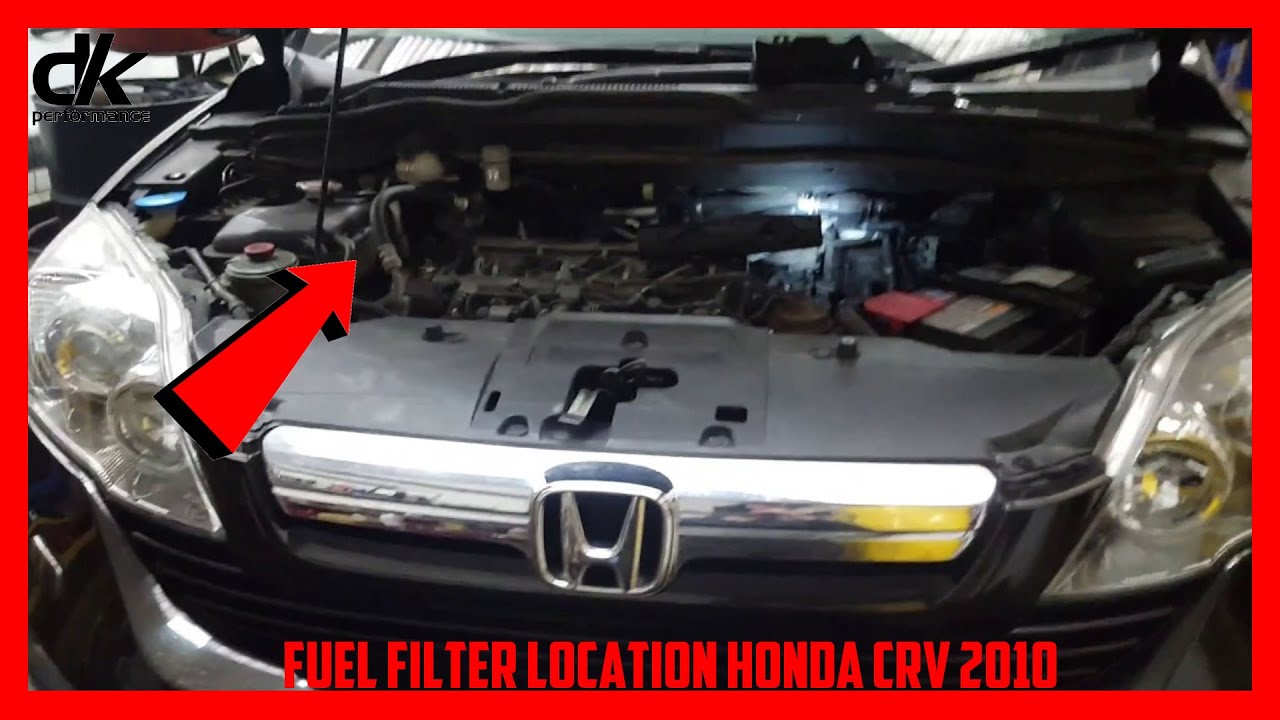
The 1997-2001 Honda CR-V fuel filter is located under the vehicle, along the fuel line near the fuel tank on the driver’s side frame rail. For 2002+ models, there is no external replaceable fuel filter; it’s integrated into the in-tank fuel pump assembly.
Honda CR-V Fuel Filter Location by Model Year
The fuel filter location on Honda CR-V varies significantly by generation. This trips up many owners and even some shops.
First-gen models (1997-2001) have an accessible external filter. Later ones integrate it inside the tank for emissions compliance and reduced leak points.
Knowing your exact year prevents wasted time hunting. It also avoids paying for unnecessary disassembly.
Dealerships often quote tank removal for any fuel issue on newer CR-Vs. But independents misdiagnose by assuming all models are the same.
I’ve pulled dozens of these in the shop. Always verify your VIN or underhood emissions sticker first.
1997-2001 Honda CR-V (First Generation) Fuel Filter Location
This inline filter sits exposed under the car. It’s a 30-minute DIY job.
It’s a cylindrical canister about 3 inches long. It’s clamped to the frame rail right behind the driver’s side rear wheel area, near where the fuel line exits the tank.
- Park on level ground, chock wheels, and relieve fuel pressure by removing the fuel pump fuse (in the under-hood fuse box, labeled “FUEL PUMP”) and cranking the engine until it stalls.
- Jack up the rear, support on stands, and slide under the driver’s side.
- Look for the black plastic or metal filter with two fuel lines (inlet from tank, outlet to engine); it’s secured by a bracket and hose clamps.
2002-2006 Honda CR-V (Second Generation) Fuel Filter Location
No external filter here. It’s built into the fuel pump module inside the tank.
Accessing it requires dropping the tank. Or use a specialized tool through the access panel under the rear seat, but Honda doesn’t provide one stock.
Shops hate this job because fuel tanks are rarely empty. This leads to siphoning or tank drop.
Owners report persistent “filter clogged” codes (P0171 lean). These vanish after pump replacement.
2007-2011 Honda CR-V (Third Generation) Fuel Filter Location
Again, integrated in-tank with the fuel pump strainer. The pump assembly includes a non-serviceable mesh filter.
It rarely clogs unless contaminated by bad gas or tank debris.
Common misdiagnosis: Dealerships blame injectors first. They quote $1,200+ when a $200 pump swap fixes it.
Probe the tank vent lines too. Clogged EVAP can mimic filter issues.
2012-2016 Honda CR-V (Fourth Generation) Fuel Filter Location
Fully in-tank, part of the jet pump and main fuel pump unit. Honda updated the design for direct injection prep.
It’s still not separately replaceable without pulling the whole assembly.
2017-Present Honda CR-V (Fifth Generation and Hybrid) Fuel Filter Location
In-tank only, with high-pressure variants on turbo models. Hybrids add complexity with dual pumps.
The primary filter is in the tank. Secondary in the engine bay high-pressure line on some trims.
| Model Year | Filter Type | Location | DIY Difficulty |
|---|---|---|---|
| 1997-2001 | External Inline | Under car, driver’s frame rail | Easy (30 min) |
| 2002-2016 | In-Tank Integrated | Fuel pump assembly | Hard (3-5 hrs) |
| 2017+ | In-Tank + HP Filter | Tank + Engine Bay (Turbo) | Very Hard |
How to Replace Fuel Filter on 1997-2001 Honda CR-V Step by Step
For first-gen CR-Vs, replacement is straightforward. Recommended every 30,000-50,000 miles or if you notice hesitation, hard starts, or lean codes.
Newer models skip this unless the whole pump fails. Don’t let shops upsell a “filter service.”
I’ve done this on rusty AWD CR-Vs where lines seize. Always have penetrating oil and flare-nut wrenches ready.
Expect 5-10 PSI residual pressure even after fuse pull.
- Prep and Safety: Disconnect battery negative, relieve pressure via fuse crank method. Drain 1/4 tank max for safety; wear eye protection and gloves—gasoline sprays.
- Access the Filter: Jack rear, support axle stands. Locate filter on frame rail; spray clamps with PB Blaster if seized.
- Remove Old Filter: Use 10mm socket for bracket bolt. Loosen inlet/outlet clamps with pliers (don’t crush lines). Plug lines with golf tees or rags to minimize spill.
- Install New Filter: Honda OEM part #16900-P72-003 or equivalent (e.g., Wix 33032). Note flow direction arrow (tank to engine). Tighten clamps firmly but not crushingly (20-30 in-lbs).
- Test: Reinstall fuse, reconnect battery, turn key to ON (prime pump 2x), check for leaks. Start engine, inspect under car while running.
Pro tip: On Ex models with Real Time AWD, check rear driveshaft clearance. Torque bracket to 16 ft-lbs; overtightening snaps plastic clips.
Honda CR-V Fuel Delivery Problems Mimicking Clogged Filter
80% of “fuel filter” complaints on 2002+ CR-Vs aren’t the filter. It’s pump wear, bad relays, or wiring.
Dealerships scan for codes but skip live data like fuel pressure. It should hold 50 PSI KOEO.
Owners flood forums with surging idle or no-starts. Test fuel pressure first with a $20 gauge before dropping $800 on parts.
Low Fuel Pressure Causes and Fixes
Prime suspect is the in-tank pump failing at 100k+ miles. Symptoms: Cranks but won’t fire, or power loss under load.
- Fuel Pump Test: Key ON, listen for 2-sec hum from tank. No hum? Swap main relay (under dash, part #39794-SDA-A03).
- Pressure Check: Tee into Schrader valve on fuel rail (1997-2001) or service port (newer). Should be 48-55 PSI; below 40 PSI = pump or regulator bad.
- Pump Replacement: Drop tank (8 bolts, 2 straps), disconnect EVAP hoses carefully. Transfer pump sock/filter to new assembly ($150-250).
Fuel Pump Relay and Fuse Issues
Overheating relays cause intermittent no-starts, especially in hot weather. Located in under-hood box; swap with horn relay to test.
Clogged Tank Screen or Bad Gas
Watered-down fuel from stations clogs the in-tank strainer first. Add fuel stabilizer, run premium, or drop tank to clean.
Why Dealerships Overquote CR-V Fuel Filter Jobs and What to Do
Dealers charge $300-500 for 1997-2001 filter swaps (15 min labor). And $1,000+ for in-tank “service” on newer ones, often replacing unnecessary parts.
They push “lifetime filter” myth but ignore pump wear.
Indies do better but still drop tanks routinely. Bring your own parts (RockAuto) and watch the job—insist on pressure tests first.
- Quote red flags: “Need to R&R fuel tank” without pressure verification.
- DIY savings: $20 filter vs. $400 shop job.
- Legal tip: If under warranty, demand TSB checks (e.g., 2002-2006 pump recall vibes).
“Took my 2005 CR-V to Honda dealer for stumble—$1,200 quote for pump/filter. Did pressure test myself, relay was bad. $20 fix.” – Real owner experience
Tools and Parts Needed for Honda CR-V Fuel System DIY
Essential kit for any CR-V fuel work: Fuel pressure gauge, flare-nut wrench set (10-17mm), line disconnect tools, jack/stands, catch pan.
OEM filters best for fit; aftermarket like Fram or Purolator leak on rusty lines. Torque specs: Fuel rail 20 ft-lbs, tank straps 28 ft-lbs.
| Tool/Part | Purpose | Cost |
|---|---|---|
| Fuel Pressure Gauge | Diagnose pressure | $20 |
| Line Wrench Set | Avoid rounding fittings | $30 |
| OEM Filter (97-01) | Direct replacement | $25 |
| Fuel Pump Assembly | 2002+ full swap | $200 |
FAQs
Does my 2015 Honda CR-V even have a fuel filter?
No external one. It’s integrated in the tank with the pump.
Replace only if pump fails or contaminated fuel clogs it.
Can I clean the in-tank fuel filter instead of replacing?
Not really; the mesh strainer is semi-permanent. Ultrasonic clean if accessible, but new assembly is safer long-term.
What are symptoms of bad fuel filter on Honda CR-V?
Hesitation on acceleration, hard starting, engine surging, or P0171/P0174 lean codes. Verify with pressure test.
How often to replace Honda CR-V fuel filter?
Every 30k miles on 1997-2001; inspect pump at 100k on later models. Bad gas accelerates wear.
Is fuel filter causing my CR-V to not start?
Possible on older models, unlikely on new. Check pump hum, relay, and pressure first—clogged filters rarely prevent starting cold.
In summary, pinpoint your CR-V’s fuel filter by model year to avoid shop rip-offs.
For 1997-2001, it’s a quick under-car win; post-2001, focus on pressure diagnostics and pump health.
Armed with these steps, handle it yourself confidently. Saving hundreds while fixing it right the first time.
Leave a Reply