
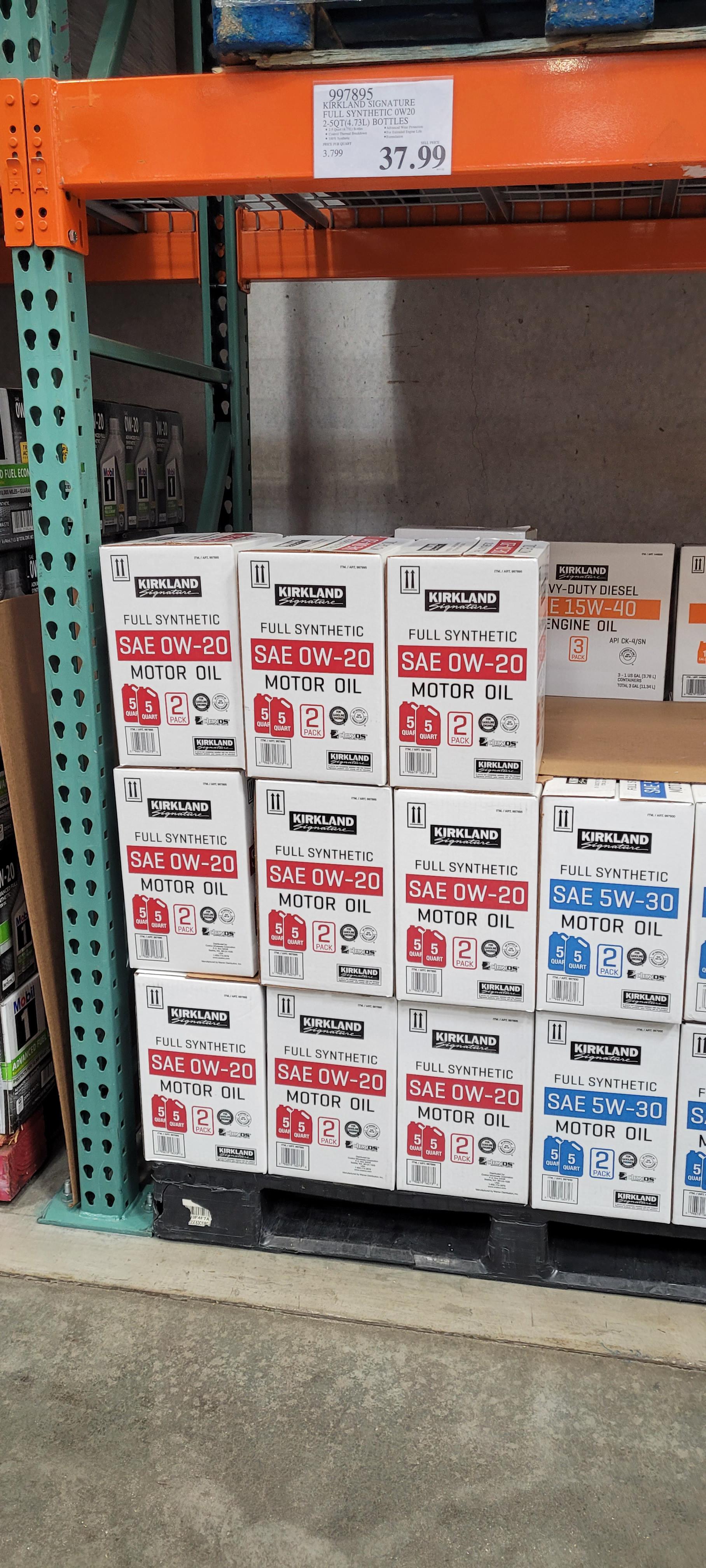
Yes, Kirkland motor oil delivers solid performance as a full synthetic option that meets major OEM specifications at a lower cost than most premium brands.
Is Kirkland motor oil as good as Mobil 1?
Kirkland Signature motor oil performs comparably to Mobil 1 in standard viscosity grades for most daily drivers because it meets the same API SN Plus and ILSAC GF-5 or GF-6 standards.
Independent lab tests shared on enthusiast forums show similar wear protection numbers and oxidation resistance when both oils run at similar temperatures.
Many owners report no difference in engine noise or oil consumption after switching from Mobil 1 to Kirkland for 5,000-mile intervals.
Base stock and additive package differences
Kirkland uses a Group III base stock blended with a robust additive package that includes detergents, anti-wear agents, and friction modifiers.
Mobil 1 often includes a higher percentage of Group IV PAO base stock in certain formulations, which can provide slightly better cold-flow properties in extreme winter conditions.
For vehicles operating in moderate climates, the difference rarely shows up in real-world service.
What viscosity grades does Kirkland motor oil come in and which engines suit each grade?
Kirkland currently offers 5W-20, 5W-30, and 0W-20 full synthetic formulas that cover the majority of late-model Toyota, Honda, Ford, GM, and Hyundai engines.
The 5W-30 grade works well in turbocharged direct-injection engines that require extra high-temperature protection.
Always verify the exact specification printed on your oil filler cap before purchase because some European vehicles demand ACEA ratings not listed on Kirkland bottles.
Matching Kirkland oil to specific OEM requirements
Toyota and Honda 0W-20 engines accept Kirkland 0W-20 without issue because it carries the ILSAC GF-6A starburst symbol.
GM dexos1 Gen 3 licensed vehicles can safely use the 5W-30 version, although some dealers still recommend the licensed dexos bottle for warranty claims.
Ford EcoBoost engines benefit from the 5W-30 grade during track or towing use where sustained high oil temperatures occur.
Does Kirkland motor oil cause sludge or premature wear?
No widespread sludge reports exist when owners follow the manufacturer’s recommended change interval and use the correct filter.
A small number of high-mileage vehicles with neglected PCV systems showed varnish after 8,000-mile drains, but the same pattern appears with any conventional or synthetic oil left in service too long.
Regular oil analysis from users on Bob Is The Oil Guy shows Kirkland maintains total base number above 3.0 at 6,000 miles in most gasoline engines.
Step-by-step oil analysis process for Kirkland users
- Collect Sample: Collect a sample at 4,000–5,000 miles using a clean extraction pump through the dipstick tube.
- Lab Submission: Send the sample to a lab such as Blackstone or Oil Analyzers for wear metals, viscosity, and oxidation.
- Data Comparison: Compare iron, aluminum, and copper readings against the previous sample to detect early bearing or cam wear.
- Interval Adjustment: Adjust drain interval downward if silicon levels rise, indicating possible air filter bypass.
How does Kirkland motor oil perform in extreme heat or cold?
The 0W-20 grade flows adequately down to -30 °F and protects up to 300 °F oil temperature in turbocharged applications.
Owners in desert regions report stable pressure during 110 °F ambient days when the oil is changed every 5,000 miles.
In sub-zero climates, some drivers add a quart of 0W-40 synthetic for the first cold start of the season rather than switching brands entirely.
Winter preparation checklist
-
✓
Electrical Check: Confirm battery and block heater function before temperatures drop below 0 °F. -
✓
Filter Installation: Install a new oil filter with the correct bypass valve rating for your engine. -
✓
Fresh Top-off: Top off with fresh Kirkland 0W-20 after the first 500 miles of cold-weather driving to remove any fuel dilution.
What are the real-world cost savings and change interval recommendations?
A five-quart jug of Kirkland typically costs 40–50 percent less than equivalent Mobil 1 or Pennzoil Platinum at retail.
Most naturally aspirated engines can safely reach 6,000–7,000 miles on Kirkland when paired with a quality filter and regular highway driving.
Turbocharged or short-trip vehicles should stay closer to 5,000 miles to keep oxidation and fuel dilution in check.
Frequently Asked Questions
Can I mix Kirkland oil with another brand during an emergency top-off?
Yes, any API-licensed synthetic can be mixed temporarily without harming the engine, but return to a full Kirkland fill at the next service to maintain consistent additive chemistry.
Is Kirkland oil suitable for diesel engines?
No current Kirkland formula carries the CK-4 or FA-4 rating required for modern diesels; use a dedicated heavy-duty diesel oil instead.
Does Kirkland oil void manufacturer warranties?
No, as long as the oil meets or exceeds the viscosity and performance rating listed in your owner’s manual, warranty coverage remains intact.
How should I store an opened jug of Kirkland oil?
Keep the cap tightly sealed and store the jug upright in a cool, dry location away from direct sunlight; use within 12 months of opening.
Conclusion
Kirkland motor oil provides reliable protection and strong value when matched to the correct viscosity and changed on schedule.
Vehicle owners who perform their own maintenance can confidently use it in the majority of gasoline-powered cars and trucks without sacrificing engine longevity.
Leave a Reply