
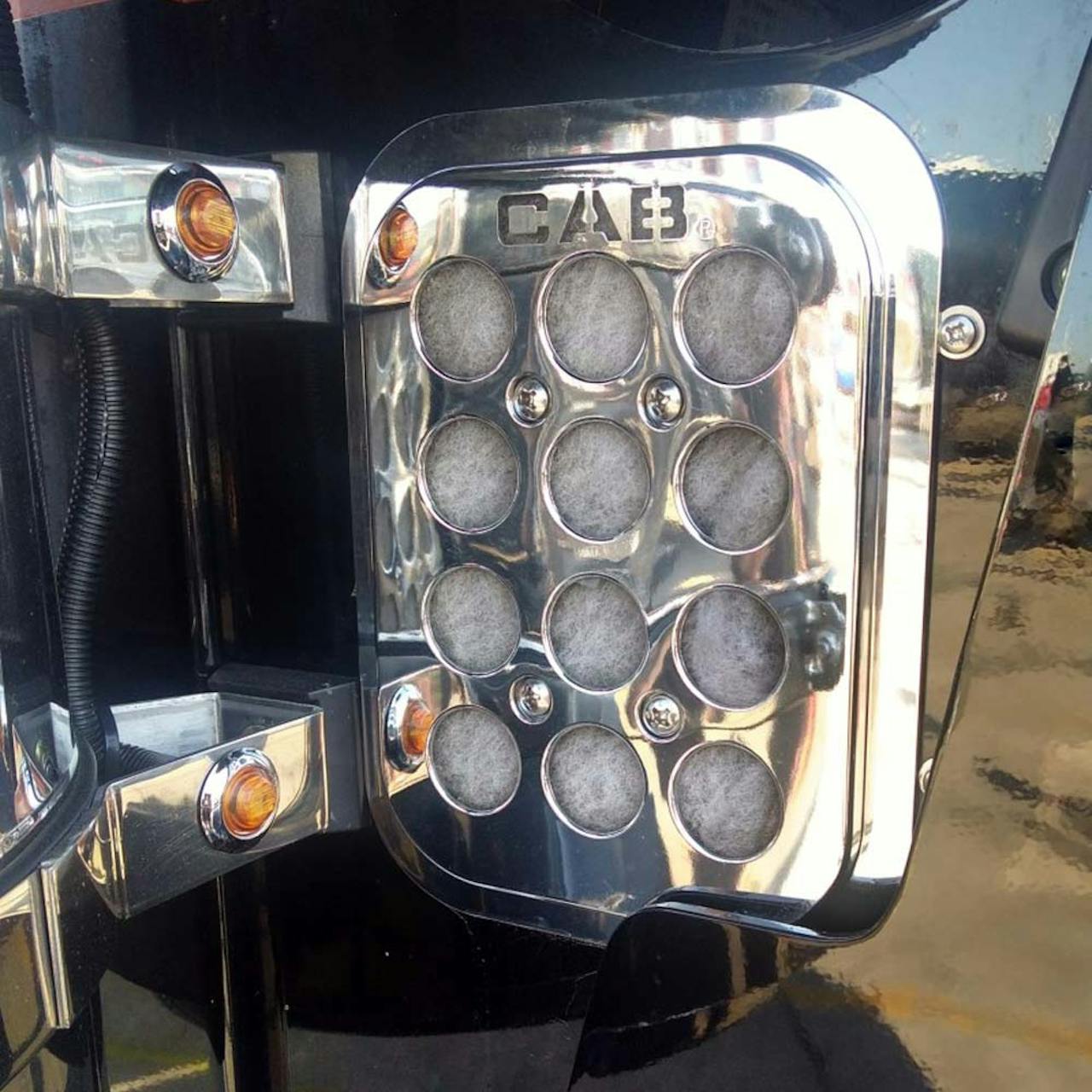
Where Is the Cabin Air Filter on a Kenworth T800?
The cabin air filter on a Kenworth T800 is located behind the glove box inside the cab. You access it by opening the glove box, squeezing the sides inward to release the stop tabs, and letting the door swing down fully.
The filter housing sits directly behind the glove box opening and slides out without any tools. Some later model T800s with updated HVAC systems place the filter in a slot on the passenger-side fresh air intake under the hood cowl.
On most Kenworth T800 models built from the mid-2000s onward, the cabin air filter sits behind the glove box on the passenger side. Kenworth tucked the filter into a plastic housing that is only accessible once you drop the glove box door completely open.
The trick that catches most first-time owners is the glove box stop tabs. You must squeeze both sides of the glove box inward simultaneously while pushing the door past its normal stop point. The door will then swing down and hang freely, exposing the filter housing behind it.
Older T800 models, particularly those built before 2004, may not have a cabin air filter at all. Kenworth did not always include one as standard equipment on earlier production runs. If you cannot find a housing behind the glove box, check the fresh air intake plenum under the hood on the passenger side of the cowl area.
Checking the Fresh Air Intake Location
Some T800 configurations, especially those with certain HVAC option packages, route the cabin air filter through the cowl intake. Open the hood and look at the passenger-side cowl area near the base of the windshield. You may see a plastic cover or louvered panel held in place with clips or small screws.
Remove that cover and inspect for a flat rectangular filter slot. If your truck has this setup, the filter slides in from the top and sits horizontally in the intake duct before air reaches the blower motor.
How to Replace the Kenworth T800 Cabin Air Filter Step by Step
Replacing the cabin air filter on a T800 takes under five minutes and requires zero tools. The entire job happens from inside the cab once you locate the filter housing.
🔧 Tools and Parts You Need
- Replacement cabin air filter (standard size is approximately 10 x 8 x 1 inch, but verify your specific year)
- A vacuum or damp cloth to clean the housing
- Optional: gloves if the old filter is excessively dirty
✅ Step-by-Step Replacement Process
- Open the glove box and empty its contents completely.
- Squeeze both side walls of the glove box inward to release the plastic stop tabs.
- Let the glove box door swing all the way down past its normal resting position.
- Locate the filter housing cover directly behind the glove box opening. It is a flat plastic panel, usually gray or black.
- Release the clips or tabs holding the housing cover in place and remove it.
- Slide the old filter out and note which direction the airflow arrow points.
- Vacuum or wipe out any debris, leaves, or dust sitting inside the housing.
- Install the new filter with the airflow arrow pointing in the same direction as the old one (typically downward or toward the evaporator).
- Replace the housing cover and snap it back into place.
- Squeeze the glove box sides inward again and swing the door back up into its normal position, re-engaging the stop tabs.
What Happens If You Never Change the Cabin Air Filter on a T800?
A clogged cabin air filter causes weak airflow from the vents, musty odors inside the cab, and increased dust buildup on the dashboard and interior surfaces. In severe cases, the restricted airflow forces the blower motor to work harder, which can shorten its lifespan significantly.
Truck drivers who run routes through dusty construction zones, agricultural areas, or unpaved yards often need to replace the filter every three to six months. Highway-only drivers in cleaner environments may get 12 to 18 months out of a single filter.
⚠️ Signs Your T800 Cabin Air Filter Is Clogged
- Noticeably reduced air volume from the vents even on the highest blower setting
- A damp, musty, or sour smell when the HVAC system first kicks on
- Visible dirt, leaves, or rodent nesting material when you pull the filter out
- Excessive fogging on the inside of the windshield during humid weather
- The blower motor making a louder-than-normal whining sound at high speeds
Why the Dealership Might Tell You Your T800 Does Not Have a Cabin Air Filter
This happens more often than it should, and it drives owners crazy. Some dealership service writers are not familiar with the T800 cabin air filter location because it is not as obvious as it is on passenger vehicles. They will sometimes tell you the truck does not have one simply because they do not know where to look.
Always pull your glove box down yourself before accepting that answer. If you find the housing, you have just saved yourself a diagnostic fee and can do the replacement for the cost of a filter, which typically runs between 15 and 40 dollars depending on the brand.
When the Truck Genuinely Does Not Have One
If your T800 is an earlier production model without a filter housing behind the glove box and without a cowl-intake filter slot, your truck may legitimately not have a cabin air filter provision. In that case, you can still improve cabin air quality by keeping the blower motor housing clean and periodically blowing out the fresh air intake with compressed air.
Best Replacement Cabin Air Filters for the Kenworth T800
If you haul livestock, run through agricultural dust, or park near fuel islands frequently, a carbon-infused filter will do a noticeably better job at neutralizing odors than a standard paper filter. The K&N reusable option makes financial sense if you are diligent about cleaning it every 30,000 to 50,000 miles.
Frequently Asked Questions
Does every Kenworth T800 have a cabin air filter?
No. Some older T800 models were not equipped with a cabin air filter from the factory. Check behind the glove box and at the cowl intake on the passenger side to confirm.
If neither location has a filter housing, your truck does not have one provisioned.
Can I run my Kenworth T800 without a cabin air filter installed?
Yes, the truck will operate normally without one. However, you will get more dust, pollen, and debris entering the cab, and the blower motor and evaporator core will accumulate dirt faster, which can reduce HVAC efficiency over time.
How often should I replace the cabin air filter on my T800?
Every 12 months or 30,000 miles under normal driving conditions. If you operate in dusty environments, replace it every three to six months instead. Pull it out and inspect it visually; if it looks gray or packed with debris, it is overdue.
Will a clogged cabin air filter affect my defroster performance?
Yes. A clogged filter restricts total airflow through the HVAC system, which means the defroster will push less air onto the windshield. This can cause dangerously slow defogging in cold or humid conditions.
Takeaway: Know Where Your Filter Is and Change It Yourself
The Kenworth T800 cabin air filter is one of the simplest maintenance items you can handle on your own. Knowing its exact location behind the glove box saves you from paying a shop for something that takes less than five minutes.
Keep a spare filter in your cab, inspect it at every oil change, and swap it out the moment airflow starts to drop or odors creep in. Clean air inside the cab means better visibility, fewer allergy symptoms on long hauls, and a blower motor that lasts the life of the truck instead of burning out early.
Leave a Reply