
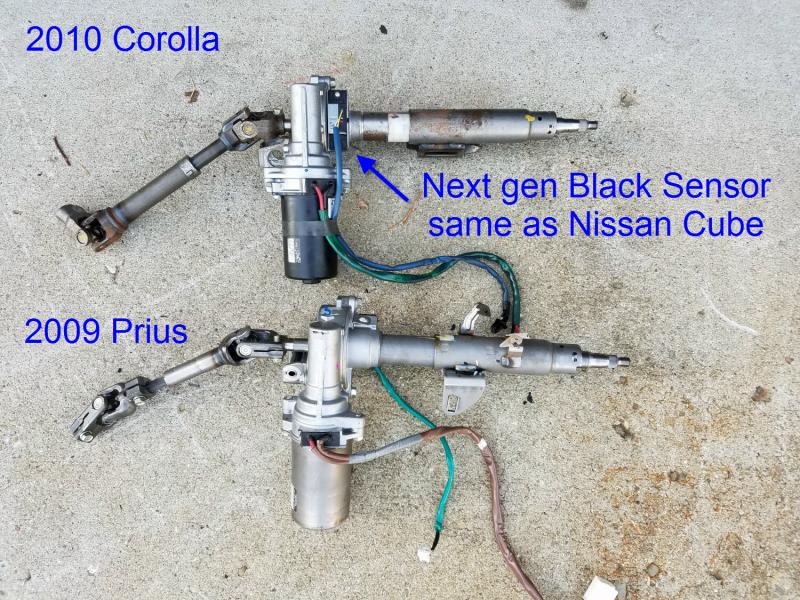
Toyota electric power steering problems typically result from torque sensor failure, low battery voltage, or EPS control module faults that trigger sudden loss of assist and dashboard warnings.
What are the most common symptoms of Toyota electric power steering failure?
Toyota owners most often report a sudden stiff steering wheel at low speeds combined with an EPS warning light on the dash.
The vehicle may also display a message such as “Power Steering System Malfunction” and store DTCs like C1511 or C1521.
Another frequent symptom is intermittent assist that returns after the vehicle sits overnight, pointing to heat-related sensor or module issues.
Drivers notice the steering feels normal at highway speeds but becomes extremely heavy during parking maneuvers.
⚙ Steering wheel vibration or pulling under assist
When the torque sensor begins to fail, the EPS module may overcompensate and create a slight pull or vibration through the wheel.
This usually appears between 30 and 50 mph and is often misdiagnosed as an alignment problem.
Why does the electric power steering fail on Toyota Camry, Corolla, and RAV4 models?
Most Toyota EPS failures trace back to the torque sensor inside the steering column, which loses calibration or develops internal cracks after 80,000–120,000 miles.
The sensor’s signal becomes erratic and the EPS ECU shuts down assist as a safety measure.
Weak or aging 12-volt batteries are the second leading cause.
Toyota’s EPS system requires at least 11.8 volts under load; anything lower triggers a protective shutdown even though the battery may still start the engine.
Model-specific failure patterns
- 2007–2011 Camry: Torque sensor and steering column harness chafing near the dash grommet are the top two issues.
- 2010–2018 Corolla: EPS control module solder joint cracks after repeated heat cycles cause random assist loss.
- 2013–2018 RAV4: Low battery voltage combined with aftermarket stereo amplifiers that create electrical noise frequently sets EPS codes.
How to diagnose Toyota EPS problems without a dealer scan tool
Begin with a basic voltage test at the battery with the engine running.
A healthy charging system should show 13.8–14.4 volts.
Readings below 13.5 volts while the steering wheel is turned lock-to-lock point to charging or battery issues.
Next, inspect all EPS-related fuses in the engine compartment and interior fuse boxes.
Blown fuses often result from shorted wiring in the steering column rather than a failed module.
Step-by-step code reading and sensor testing
- Connect an OBD-II scanner capable of reading chassis codes (not just engine codes).
- Turn the ignition on, rotate the steering wheel slowly from lock to lock, and watch for codes C1511, C1521, or U0129.
- Clear the codes, then road-test while monitoring live data for torque sensor voltage; it should sweep smoothly between 0.5 V and 4.5 V.
- If the signal drops out or spikes, the torque sensor or entire steering column assembly requires replacement.
What are the proven DIY fixes for Toyota electric power steering issues?
Start with the simplest and cheapest repairs first.
Replace the battery if it is more than four years old, then retest the system.
Many owners report the EPS light disappears permanently after installing a higher-capacity AGM battery.
If battery voltage is stable, inspect the wiring harness that runs from the EPS module to the torque sensor.
Look for chafed spots where the harness passes through the firewall or near the brake pedal assembly.
Repair sequence for common Camry and Corolla columns
- Disconnect: Remove the negative battery terminal and wait ten minutes for the EPS capacitors to discharge.
- Expose: Remove the steering column shrouds and lower dash panel to expose the harness.
- Repair: Fix any damaged wires using solder and heat-shrink tubing, then wrap the section with electrical tape and split loom.
- Reset: Reassemble and perform a steering angle sensor reset with a capable scan tool before road-testing.
When should you replace the entire steering column versus just the sensor?
On 2007–2011 Camrys the torque sensor is not serviced separately, so the complete steering column must be replaced.
Labor time averages four to six hours at an independent shop.
2012 and newer models often allow separate torque sensor replacement, cutting parts cost roughly in half.
Always verify the exact part number against the VIN before ordering components.
FAQ
Can a weak alternator cause EPS failure even if the battery tests good?
Yes. An alternator that cannot maintain 13.8 volts under electrical load will let system voltage sag when the EPS motor draws current, triggering shutdown.
Is it safe to drive with the EPS warning light on?
The vehicle remains drivable but steering effort increases dramatically at low speeds. Avoid highway speeds until the system is repaired.
Will disconnecting the battery reset the EPS light permanently?
Disconnecting the battery clears the light temporarily but does not fix the underlying sensor or voltage problem. The code usually returns within a few drive cycles.
How much does a Toyota dealer typically charge for EPS diagnosis?
Dealerships commonly quote $150–$200 for diagnosis plus the cost of any required column replacement, which can exceed $1,800 after parts and labor.
Conclusion
Toyota electric power steering failures follow predictable patterns centered on the torque sensor, battery voltage, and wiring integrity.
Systematic voltage testing followed by targeted harness inspection resolves the majority of cases without expensive module replacement.
Owners who address the root cause rather than simply clearing codes achieve long-term reliability and avoid repeated dealership visits.
Leave a Reply