
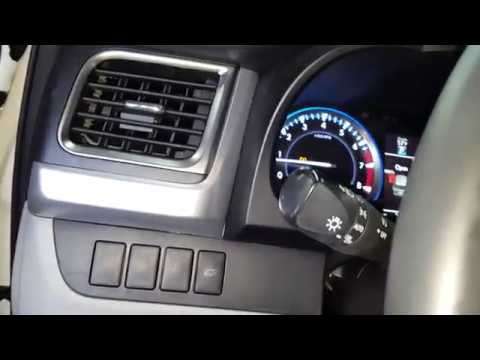
The Toyota Highlander TPMS reset procedure depends on the model year. For most 2014 and newer models, you can reset the system through the instrument cluster menu by holding the TPMS button until the light blinks three times. For older models, a specific drive cycle or a scan tool may be required.
Why Does My Toyota Highlander TPMS Light Stay On After Replacing Tires?
The TPMS light will stay on because the new tire pressure sensors have not been “taught” or relearned to the vehicle’s computer. The system is still searching for the signal IDs from your old sensors. Until you perform a reset procedure that pairs the new sensor IDs with the vehicle, the light will remain illuminated.
The Real-World Cause
When you install new tires, wheels, or just TPMS sensors, each sensor has a unique digital ID. Your Highlander’s computer has a memory of the four old IDs.
The system recognizes that the signals it’s receiving don’t match what it expects, which triggers a fault. Simply inflating the tires to the correct pressure (found on the driver’s door jamb sticker) is not enough; the system needs to be told to learn the new IDs.
How to Fix It: Model-Year Specific Steps
The reset method changed significantly around 2014. Using the wrong procedure is the most common reason DIY attempts fail.
For Toyota Highlanders (Approx. 2014 and Newer):
- Ensure all tires, including the spare if it has a sensor, are inflated to the correct PSI.
- Turn the ignition to the “ON” position (do not start the engine).
- Use the steering wheel controls to navigate to the “Settings” or “Vehicle Settings” menu on the multi-information display.
- Select “TPMS” or “Tire Pressure Monitoring System.”
- Select “Set Pressure” or “Change Pressure.” The TPMS warning light on the dash should start blinking.
- Drive the vehicle at speeds above 25 mph (40 km/h) for 10-15 minutes. The light should turn solid and then extinguish once the relearn is complete.
For Toyota Highlanders (Approx. 2013 and Older):
- Inflate all tires correctly.
- Turn the ignition to the “ON” position.
- Locate the TPMS reset button. It is usually a small button under the steering wheel, near the hood release, or on the lower dash. You may need the owner’s manual to find it.
- Press and hold the TPMS button until the tire pressure warning light on the dashboard blinks slowly three times, then release it.
- Start the engine and let it idle for 20 minutes. This completes the initialization. Alternatively, driving for 20-30 minutes at varying speeds can also complete the process.
How to Manually Reset TPMS on Toyota Highlander Without a Scan Tool
You can manually reset the TPMS on most Highlanders using the method described above—either through the dashboard menu for newer models or the reset button for older ones. A professional scan tool is typically only needed for advanced diagnostics or if the manual method fails repeatedly.
Step-by-Step Manual Reset Process
The manual method relies on a “stationary relearn” or a “passive relearn” initiated by your actions. For the 2014+ menu method, you are essentially commanding the computer to enter learn mode.
For the button method, you are forcing a hard reset of the system’s memory. After initiating the sequence, the vehicle uses its own internal antennas to read the unique RF signals from each sensor as you drive, matching them to their correct wheel position (left front, right rear, etc.).
Common Pitfalls During Manual Reset
- Incorrect Initiation: Not holding the button long enough or not navigating to the exact sub-menu in the cluster.
- Weak Sensor Battery: TPMS sensor batteries last 5-10 years. If your sensors are original to a 2010 model, a dead battery will prevent any reset from working. The sensor itself must be replaced.
- Aftermarket Wheel/Tire Combo: Some very large or conductive wheels can block the RF signal. Using the correct OEM-style sensor (not a universal clamp-in) is critical.
Toyota Highlander TPMS Sensor Replacement: OEM vs. Aftermarket and Cost
When replacing a failed TPMS sensor, you have choices. A new OEM Toyota sensor from a dealership will cost $80-$150 per sensor. High-quality aftermarket brands like Dorman, VDO, or ATEQ offer sensors for $30-$75 each that work perfectly once programmed.
The Programming Truth
This is where shops often overquote. A brand-new sensor, whether OEM or aftermarket, is “blank” or has a generic ID.
It must be programmed with a TPMS scan tool to match your specific vehicle’s protocol before the car can recognize it. This is a separate step from the relearn procedure.
Many tire shops include this in their service; if doing it yourself, you will need access to a tool like an Autel TS408 or ATEQ QuickSet.
When to Replace vs. Repair
You cannot repair a TPMS sensor with a dead battery or a broken stem; the entire unit is a sealed module. You can replace just the rubber valve stem core if it’s leaking, but if the metal stem housing is corroded or cracked (common in rust-belt states), the whole sensor assembly needs replacement. Always replace sensors in pairs or all four to avoid dealing with multiple failures shortly after.
What to Do If Your Toyota Highlander TPMS Light Flashes Then Stays On
A TPMS light that flashes for 60-90 seconds at startup, then remains solid, indicates a system fault, not just low tire pressure. This typically means one or more sensors are not communicating with the vehicle’s receiver.
Diagnosing the Communication Failure
- Check Sensor Battery Life: This is the #1 cause. Sensors older than 7 years are suspect. A scan tool can check each sensor’s battery status.
- Inspect for Aftermarket Interference: Certain LED lights, poorly insulated phone chargers, or even a new dashcam with a strong RF signal can occasionally interfere. Try removing recent electrical accessories.
- Check for Damaged Wiring/Receiver: Less common, but a damaged antenna in the wheel well or a fault in the body control module can cause the issue. This usually requires a professional scan tool to read specific fault codes (like C2121 – No Signal from Transmitter).
Pro Tip: A single dead sensor will usually trigger a flashing light on startup. If all four sensors are dead or missing, the light may illuminate solid without flashing. Use a dedicated TPMS scan tool to trigger each sensor individually to find the culprit.
Frequently Asked Questions (FAQ)
Do I need to reset TPMS after rotating tires on my Toyota Highlander?
Yes, for proper functionality. While the system will still warn you of low pressure, it will lose the correct wheel position (e.g., it will think the left front sensor is now on the right rear).
For 2014+ models, using the menu relearn procedure after rotation will re-map the sensor locations. For older models, the button reset will also re-initialize the positions.
Why does my TPMS light come on in cold weather?
It’s basic physics. Tire pressure drops about 1 PSI for every 10°F (5.5°C) decrease in ambient temperature.
If your tires were inflated at the boundary of the recommended pressure during summer, a significant cold snap can push them below the threshold (usually around 25-28 PSI) and trigger the light. Always check pressure when tires are cold.
Can I disable the TPMS system on my Highlander?
No. As a federally mandated safety system in the U.S. since 2007, it cannot be legally disabled. Permanently removing the warning light requires either functioning sensors or tampering with the vehicle’s electronics, which is illegal and dangerous.
I reset my TPMS, but the light came back on after a week. What’s wrong?
This indicates a slow leak or a sensor that is intermittently failing. First, meticulously check all four tires (and the spare if equipped) with a gauge and soapy water for leaks at the valve stem and bead. If pressures are stable, one sensor likely has a dying battery that works intermittently until it finally fails completely.
The Bottom Line: Persistence and Patience
Resetting your Toyota Highlander’s TPMS is usually a straightforward DIY job if you follow the correct procedure for your model year. The key takeaways are to confirm your tire pressures first, identify your reset method, and understand that a flashing light points to a sensor communication problem, not just low pressure.
If the manual reset fails after two or three attempts, the issue is almost certainly a faulty sensor that needs physical replacement and programming, not a problem with the reset procedure itself. Taking the time to diagnose it correctly saves you from a costly and unnecessary dealership visit.
Leave a Reply