
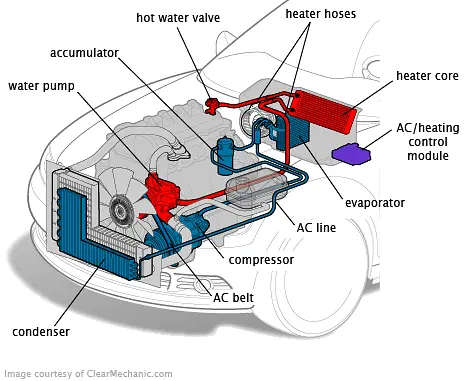
An Audi Q5 AC recharge typically costs $150–$300 at an independent shop or $300–$500 at a dealership, but many Q5 owners waste money recharging when the real problem is a leaking condenser, failed compressor, or faulty pressure sensor. Before paying for a recharge, verify the system actually holds refrigerant and the compressor engages, or you will be back in the shop within weeks.
What Refrigerant Does an Audi Q5 Use?
The refrigerant type depends on the model year. Getting this wrong can damage your AC system and cost you a compressor.
- 2009–2017 Audi Q5: Uses R134a refrigerant. This is the most common type found at any auto parts store.
- 2018–2024 Audi Q5: Transitioned to R1234yf refrigerant. This is significantly more expensive and requires a different service fitting.
If you own a 2018 or newer Q5, you cannot use the cheap R134a canister from the auto parts store. The service ports are physically different to prevent cross-contamination.
Using the wrong refrigerant will trigger fault codes and can destroy your evaporator and compressor seals.
How to Identify Which Refrigerant Your Q5 Needs
Check the sticker under the hood, typically on the radiator support or the underside of the hood itself. It will clearly state the refrigerant type and the correct charge amount in grams.
Do not guess—Audi systems are sensitive to both the type and the exact quantity of refrigerant.
How Much Does an Audi Q5 AC Recharge Cost?
A full AC recharge on an Audi Q5 runs between $150 and $500, depending on where you go and whether additional repairs are needed.
These prices assume no other faults exist. If your compressor is seized, condenser is leaking, or a pressure sensor has failed, the recharge is irrelevant.
Many shops will charge you for a recharge first, then come back with a $1,500+ repair bill when it does not fix the problem. Ask for a leak test and system diagnostic before agreeing to any recharge.
How to Recharge AC on an Audi Q5 Step by Step
If your system has been diagnosed as low on refrigerant with no leaks, a DIY recharge is straightforward. This process works for 2009–2017 R134a models.
For 2018+ R1234yf systems, most DIYers should leave it to a shop due to the high cost of refrigerant and EPA regulations.
Tools and Supplies Needed
- R134a refrigerant with gauge (available at auto parts stores)
- AC manifold gauge set (recommended for accurate readings)
- Safety glasses and gloves
- Thermometer for vent temperature check
Step-by-Step Recharge Process
- Locate the low-pressure service port. On the Audi Q5, it is on the larger-diameter aluminum line coming off the firewall, typically with a blue or black cap marked “L.” The high-pressure port is marked “H” and should never be used for charging.
- Start the engine and turn AC to maximum cold, fan on high, windows open. This ensures the compressor cycles and the system draws refrigerant properly.
- Connect the refrigerant can to the low-pressure port. Follow the instructions on the recharge kit. The engine must be running during this step.
- Add refrigerant slowly. Watch the gauge. For most Q5 models, the low-side pressure should read between 25–45 PSI at ambient temperatures around 75–85°F. Overcharging is just as damaging as undercharging.
- Check vent temperature. After charging, the center vent should blow at 38–45°F within a few minutes. Anything above 55°F indicates another problem.
- Disconnect and replace the cap. Do not leave the port uncovered—moisture intrusion will corrode the Schrader valve.
Why Is My Audi Q5 AC Not Cold After a Recharge?
If you recharged the system and the air is still warm, the refrigerant was never the root cause. Here are the most common real-world failures I see on Audi Q5 models.
1. Leaking Condenser
The Audi Q5 condenser sits low and forward in the bumper opening. Road debris, salt, and vibration cause micro-cracks and seam leaks over time.
This is the number one cause of slow refrigerant loss on Q5 models, especially 2013–2018. A UV dye test or electronic sniffer will confirm it quickly.
2. Failed AC Compressor
Audi Q5 compressors, particularly the Denso units in 2009–2015 models, are known to develop internal valve failures. The compressor clutch may engage, but the unit does not build proper pressure.
You will see low-side pressure that stays high and high-side pressure that stays low—a classic sign of internal bypass.
3. Faulty Pressure Sensor
The Q5 uses a high-pressure sensor on the condenser line to tell the ECU whether to allow the compressor to run. If this sensor reads incorrectly, the ECU will not ground the compressor clutch relay, and the AC will blow warm regardless of refrigerant level.
This throws fault code 00256 in most VCDS scans.
4. Blend Door Actuator Failure
Sometimes the AC system is working perfectly, but the blend door behind the dash is stuck in the heat position. You will notice one side blowing cold and the other blowing warm, or all vents blowing warm despite correct refrigerant pressures.
The actuator motor is a known weak point on the 8R chassis Q5.
5. Expansion Valve or Orifice Tube Blockage
If the system was ever opened or ran low on refrigerant for a long time, moisture can freeze at the expansion valve and restrict flow. The evaporator will frost over, and airflow drops.
This typically shows as low-side pressure dropping below 10 PSI while the high side spikes above 300 PSI.
Audi Q5 AC Recharge: DIY vs. Dealership—What Makes Sense?
A DIY recharge makes sense only when the system is confirmed low with no active leaks. Dealerships charge a premium but have the equipment to evacuate, vacuum, and recharge by weight—which is the only correct method for Audi systems.
When to Do It Yourself
- You have verified low refrigerant with a manifold gauge set
- No visible leaks or UV dye residue anywhere on the system
- You are comfortable working around the engine bay
- The system lost charge slowly over one or more seasons
When to Take It to a Shop
- The system is completely empty—you need a vacuum pull before recharging
- You own a 2018+ model with R1234yf refrigerant
- The compressor clutch is not engaging at all
- You hear grinding or clicking from the compressor
- You want a proper leak test with nitrogen or UV dye
Audi Q5 AC Recharge FAQ
Can I use stop leak additives in my Audi Q5 AC system?
No. Stop leak products contain sealants that gum up the expansion valve, compressor internals, and the receiver drier. On Audi systems with tight tolerances, these additives almost always cause more expensive damage than the original leak.
How often should an Audi Q5 AC system need recharging?
A properly sealed system should never need recharging. If you are losing refrigerant, there is a leak somewhere.
Small leaks at the condenser or Schrader valves may take a year or two to show symptoms, but the underlying problem will not fix itself.
What is the correct refrigerant capacity for an Audi Q5?
Most 2009–2017 Q5 models require approximately 525–575 grams of R134a. The exact specification is listed on the underhood sticker.
Overcharging by even 50 grams can cause high-pressure cutoff and compressor damage.
Will a low refrigerant level trigger a check engine light on the Q5?
Not usually. The AC system runs its own diagnostic. You will more likely see an AC-specific warning in the climate control display or a stored fault code readable only through VCDS or OBD-Eleven.
A check engine light for AC issues is rare unless the compressor seizes and throws the belt.
Why does my Audi Q5 AC smell bad after sitting overnight?
This is a separate issue from refrigerant. Mold and bacteria grow on the evaporator core because moisture accumulates there. Audi sells an evaporator cleaning kit, or a shop can spray an antimicrobial treatment through the drain tube.
Replace the cabin air filter at the same time.
Final Thoughts on Audi Q5 AC Recharge
Before spending money on a recharge, invest in a proper diagnostic. A $30 manifold gauge set or a $100 diagnostic scan at an independent shop will tell you whether the system is low on refrigerant, has a compressor fault, or has a sensor issue.
Recharging a leaking system is throwing money away. Identify the root cause, fix it once, and your Q5 will blow ice-cold air for years.
Leave a Reply