
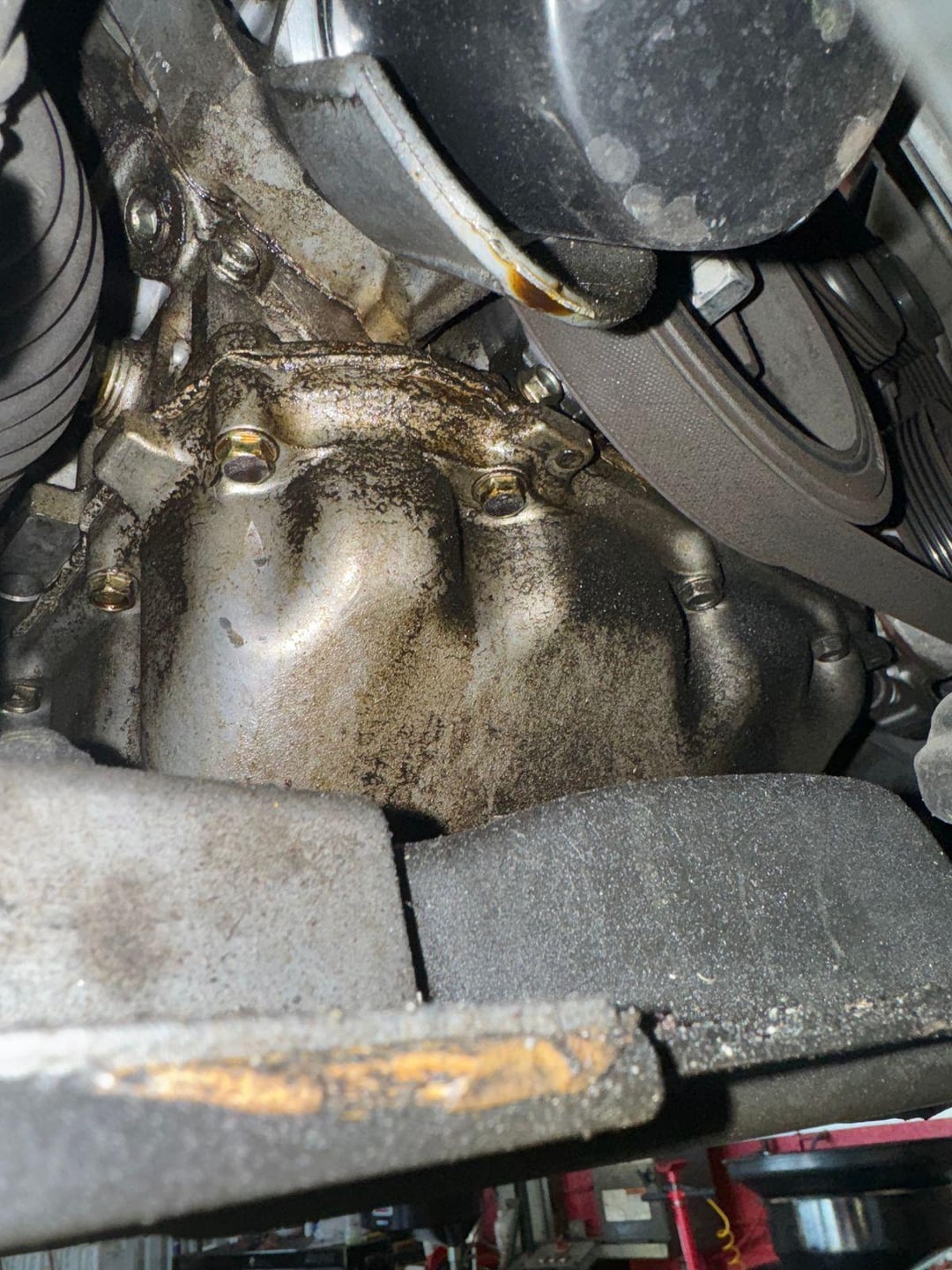
The most common oil leak sources on Honda Accords are the valve cover gasket, VTEC solenoid gasket, oil pan drain plug, and the rear main seal. Early diagnosis is key to preventing major engine damage and costly repairs.
Why is my Honda Accord leaking oil? Where should I look first?
If you see oil spots under your Accord, start with the simplest checks. The leak’s location tells a critical story.
Gravity makes oil run down and back, so the actual source is often higher and further forward than the drip on your garage floor.
Common Leak Sources to Inspect
- Valve Cover Gasket: This is the number one culprit on high-mileage Accords, especially the 2.4L and 3.5L V6 engines. Heat cycles cause the rubber gasket to harden and crack.
- VTEC Solenoid Gasket: Located on the rear of the engine block, this small gasket fails often on 2.4L i-VTEC engines. A leak here can mimic a rear main seal failure.
- Oil Pan Drain Plug: A stripped or cross-threaded plug from quick lube shops is a very common issue. The crush washer must be replaced every time.
- Oil Filter Housing: Improper installation or a double-gasketed filter causes major leaks. Always check this first after an oil change.
How do I diagnose a valve cover gasket leak on my Honda Accord?
A leaking valve cover gasket will leave oil residue along the side of the engine head and can drip onto the exhaust manifold, causing a burning oil smell. You can perform a simple dye test to confirm.
Step-by-Step Diagnosis
- Step 1 — Inspect the valve cover perimeter with a flashlight, looking for wet oil or dark buildup.
- Step 2 — Clean the engine surface with brake cleaner and a rag.
- Step 3 — Add UV dye to your engine oil and run the engine for 20-30 minutes.
- Step 4 — Use a UV light to trace the bright green dye trail back to its source.
Pro Tip: On the 3.5L V6, the rear valve cover gasket is notorious. Don’t assume it’s the rear main seal until you’ve ruled this out.
What causes the VTEC solenoid to leak and how do I fix it?
The VTEC solenoid gasket becomes brittle over time, causing oil to seep from the top rear of the engine. This leak often drips down the back of the engine block, looking severe.
The repair is straightforward and parts are cheap.
Repair Procedure for 2.4L i-VTEC Accords
- Step 1 — Disconnect the battery negative terminal.
- Step 2 — Unplug the VTEC solenoid electrical connector.
- Step 3 — Remove the two 10mm bolts securing the solenoid assembly to the engine.
- Step 4 — Clean the mating surfaces on both the solenoid and engine block thoroughly.
- Step 5 — Install the new gasket, apply a thin bead of Honda Bond to the engine block, and torque bolts to 8.7 lb-ft.
Using genuine Honda gaskets here prevents repeat failures. Aftermarket gaskets often use inferior materials that won’t last.
Is an oil pan leak serious on a Honda Accord? Can I fix it myself?
An oil pan gasket leak is typically slow but persistent. On most Accord models, the pan is sealed with liquid gasket (RTV) from the factory.
Re-sealing requires draining the oil and removing the pan.
Oil Pan Leak Repair Notes
- Drain Plug Issues: If the leak is just the drain plug, replace the aluminum crush washer with every oil change. For stripped threads, use a Time-Sert or helicoil repair kit.
- Full Gasket Replacement: This is a labor-intensive job on most models. The subframe often needs to be lowered to remove the pan. Using Honda RTV is critical for a lasting seal.
- Oil Level Sensor: The sensor on the side of the pan can also leak. It’s a simple O-ring replacement.
How much does it cost to fix an oil leak on a Honda Accord?
Repair costs vary dramatically by source and labor rates. Dealerships often overquote, while independent shops may misdiagnose the leak, charging you for unnecessary work.
Get multiple diagnoses.
Typical Repair Cost Breakdown
Frequently Asked Questions
Can I drive my Honda Accord with a small oil leak?
You can for short distances, but monitor your oil level daily. A small leak can become catastrophic if the level drops too low.
The burning smell from oil hitting hot components is also a fire risk.
Should I use “stop leak” additives in my Accord?
Generally, no. These additives swell seals temporarily and can clog oil passages, leading to bigger problems. The proper fix is always replacing the failed gasket or seal.
Why does my Accord leak oil only when it’s cold?
As the engine warms up, metal components expand, tightening the seals. A cold-start leak often indicates a hardened gasket that fails to seal until thermal expansion occurs.
This is classic valve cover gasket behavior.
Is a rear main seal leak worth fixing on a high-mileage Accord?
It depends on the car’s value and your attachment to it. The repair cost is high due to labor. Get a second opinion to confirm it’s not a cheaper VTEC solenoid leak first.
Sometimes, if the leak is minor, just monitoring the oil level is more cost-effective than a $1000+ repair.
Stop the Drip: Take Action Now
Ignoring an oil leak on your Honda Accord leads to worsening damage, environmental harm, and potential engine seizure. Diagnose the source accurately using the steps above.
For most common leaks, a DIY repair is feasible and can save you hundreds. When in doubt, find a trusted independent mechanic who specializes in Honda/Acura. A proper fix now prevents a catastrophic failure later.
Leave a Reply