
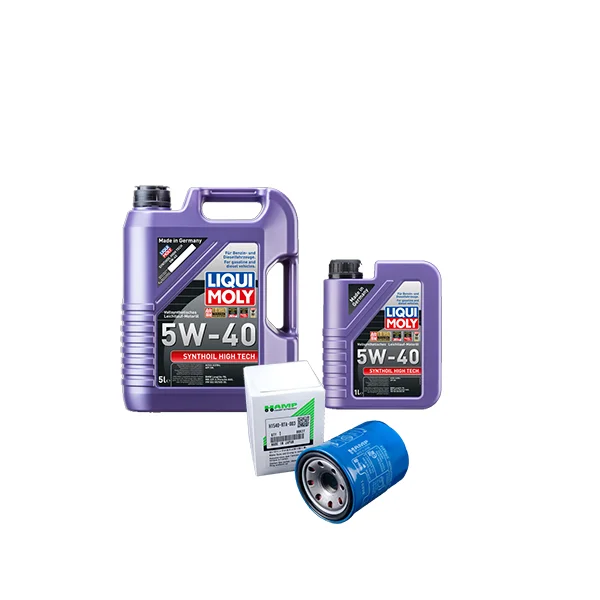
The Honda Civic requires 0W-20 full synthetic oil for most 2006 and newer models, while older Civics (2005 and prior) use 5W-20 conventional or synthetic blend. The 1.5L turbocharged engine (2016+) specifically demands 0W-20 synthetic due to tighter oil passages and turbo lubrication requirements.
What Oil Does a Honda Civic Take by Year and Engine?
The correct oil type depends entirely on your Civic’s model year and engine variant. Using the wrong viscosity can trigger premature wear, oil consumption issues, and even turbo failure on newer models. Here is the breakdown by generation.
| Model Years | Engine | Oil Type | Oil Capacity (with filter) |
|---|---|---|---|
| 2022–2025 | 1.5L Turbo / 2.0L | 0W-20 Full Synthetic | 3.7 quarts / 4.4 quarts |
| 2016–2021 | 1.5L Turbo / 2.0L | 0W-20 Full Synthetic | 3.4 quarts / 3.9 quarts |
| 2012–2015 | 1.8L / 2.4L | 0W-20 Full Synthetic | 3.9 quarts |
| 2006–2011 | 1.8L / 2.0L | 0W-20 Synthetic Blend or Full Synthetic | 3.9 quarts |
| 2001–2005 | 1.7L / 2.0L | 5W-20 Conventional or Synthetic | 3.5 quarts |
| 1992–2000 | 1.5L / 1.6L | 5W-30 Conventional | 3.5 quarts |
Always verify the oil cap stamp under your hood. Honda prints the recommended viscosity directly on the cap, and this is your single most reliable quick-reference tool when you are standing at the parts store shelf.
Why Honda Switched to 0W-20 Across the Civic Lineup
Honda made the transition to 0W-20 because thinner oil reduces internal friction, which directly improves fuel economy. The tighter manufacturing tolerances in post-2006 engines allow this thinner oil to still provide adequate film strength between moving parts.
If you own a 2006 or newer Civic and someone at a quick-lube shop pours in 5W-30 “for better protection,” stop them. Thicker oil does not mean better protection in an engine designed for 0W-20. It restricts flow through small oil galleries, starves the variable valve timing (VTEC) system, and can actually increase operating temperatures.
Can I Use Synthetic Oil in My Honda Civic?
Yes, full synthetic oil is not only compatible with every Honda Civic ever made, but it is the factory-recommended type for 2006 and newer models. Honda Genuine Motor Oil is a synthetic blend, but aftermarket full synthetics like Mobil 1, Pennzoil Platinum, and Castrol Edge perform equally well or better.
Best Oil Brands for Honda Civic Based on Real-World Testing
After years of pulling oil samples and cutting open filters, these are the oils that consistently perform well in Civics:
- Mobil 1 Extended Performance 0W-20 – Excellent shear stability in the 1.5T engine, holds viscosity well between changes
- Pennzoil Platinum 0W-20 – Uses gas-to-liquid base stocks, runs noticeably cleaner inside the valve train
- Castrol Edge 0W-20 with Fluid Titanium – Strong film strength under high RPM VTEC engagement
- Amsoil Signature Series 0W-20 – Top-tier option if you push extended drain intervals
- Honda Genuine 0W-20 – Perfectly adequate, though slightly overpriced for what you get
Oils to Avoid in Your Honda Civic
Stay away from no-name brands, recycled oil products, and any conventional oil that claims to be “just as good” as synthetic for modern engines. Also avoid high-mileage formulations with extra seal conditioners unless you actually have a leaking seal—the extra additives can cause more harm than benefit in healthy engines.
What Happens If I Use the Wrong Oil in My Honda Civic?
Using the wrong oil viscosity or type in a Honda Civic can cause oil starvation at the VTEC solenoid, increased fuel consumption, accelerated timing chain wear, and turbo bearing failure on 1.5T models. Symptoms often appear as check engine lights, rattling on cold starts, or a sluggish VTEC engagement.
Symptoms of Incorrect Oil in Different Civic Engines
1.5L Turbo Engine (2016+)
This engine is the most sensitive to oil specification. The turbocharger spins at over 150,000 RPM and relies on a thin, consistent oil film for survival. Using oil that is too thick delays lubrication during cold starts, which is exactly when most turbo wear occurs.
- Oil dilution issue: The 1.5T is known for fuel washing past the piston rings into the oil pan, especially in cold climates with short trips. Thicker oil makes this worse because it cannot evaporate fuel contaminants as efficiently. Stick with 0W-20 and change it every 5,000 miles maximum, not the 7,500+ the maintenance minder sometimes suggests.
- Turbo failure signs: Whining or whistling from the engine bay, blue smoke on startup, or oil consumption over 1 quart per 3,000 miles
1.8L and 2.0L Naturally Aspirated Engines (2006–2021)
These are more forgiving but still sensitive. The main risk with wrong oil is clogging the VVT (variable valve timing) actuator, which triggers a P0010 or P0011 code.
- VVT actuator failure: Rough idle, poor acceleration, and a rattling noise on startup that lasts 2-3 seconds
- Oil consumption: Some 1.8L Civics (especially 2006-2009) consume oil due to piston ring design. Switching to a thicker oil is the wrong fix—it masks the problem while damaging the VTEC system. Use the correct 0W-20 and monitor levels.
Honda Civic Oil Change Interval: How Often Should You Actually Change It?
Change your Honda Civic’s oil every 5,000 miles or 6 months, whichever comes first, regardless of what the maintenance minder says. The maintenance minder algorithm can stretch intervals to 7,500-10,000 miles, which is too long for the 1.5T engine and risky for any Civic driven in real-world conditions.
When to Change Oil Sooner Than 5,000 Miles
- You drive mostly short trips under 10 miles – The engine never reaches full operating temperature long enough to evaporate moisture and fuel from the oil
- You live in a hot climate and sit in traffic daily – Extended idling counts as severe-duty driving
- You have a 1.5L turbo engine – Fuel dilution is a documented issue, and more frequent changes are cheap insurance against a $2,500+ turbo replacement
- You drive the car hard or track it – High RPM operation shears oil viscosity faster
- You tow or carry heavy loads – Even though Civics are not tow vehicles, roof racks and full trunks add load
DIY Oil Change Tips for Honda Civic Owners
- Use a 65mm oil filter cap wrench for the cartridge-style filter on 2006+ models—pliers will destroy the housing
- The drain plug torque spec is 29 ft-lbs. Do not overtighten—it strips the aluminum pan threads easily
- Always pre-fill the new oil filter with fresh oil before installation to prevent a dry start
- After filling, start the engine, let it idle for 30 seconds, shut off, wait 2 minutes, then check the dipstick for an accurate reading
Frequently Asked Questions About Honda Civic Oil
Does the Honda Civic need full synthetic or can I use conventional?
For 2006 and newer Civics, Honda specifies 0W-20, which is only available as synthetic or synthetic blend. You cannot find 0W-20 in a conventional formulation. For older Civics, conventional 5W-20 or 5W-30 works, but synthetic always provides better protection and longer drain intervals.
Why does my Honda Civic burn oil between changes?
The 2006-2009 Civic 1.8L is notorious for oil consumption due to piston ring design issues. Honda issued a warranty extension for this.
For 1.5T models, oil consumption may indicate turbo seal wear or fuel dilution thinning the oil. Check your oil level every 1,000 miles to establish a baseline.
Can I mix different brands of oil in my Honda Civic?
Yes, mixing brands of the same viscosity and type (synthetic with synthetic) is safe in an emergency. All modern oils meet API and ILSAC standards and are chemically compatible. However, you should not mix conventional with synthetic regularly, and never mix viscosities like 0W-20 with 5W-30.
What oil filter does a Honda Civic use?
Most 2006+ Civics use a cartridge-style filter (Honda part 15400-PLM-A02 or equivalent). The 2016+ 1.5T uses a slightly different housing.
Quality aftermarket options include the Fram XG7317, Wix 57356, and Purolator Boss PBL14612. Avoid the cheapest filters—poor bypass valve quality means dirty oil recirculates during cold starts.
Is the Honda Maintenance Minder reliable for oil change timing?
The maintenance minder works on an algorithm that factors in engine temperature, RPM range, trip length, and time. It is intelligent, but it tends to optimize for fuel economy and environmental impact over maximum engine longevity. Real-world evidence from high-mileage Civic owners consistently shows better engine health with 5,000-mile intervals versus following the minder to 15% oil life.
Final Verdict: Choose the Right Oil and Change It on Time
The single most important thing you can do for your Honda Civic’s longevity is pour the correct 0W-20 full synthetic oil and change it every 5,000 miles. No engine treatment, additive, or miracle product comes close to the protection provided by fresh, correct-viscosity oil.
Skip the dealership markup, buy quality oil and a proper filter, and do it yourself in under 30 minutes. Your Civic’s engine will reward you with hundreds of thousands of reliable miles.
Leave a Reply