
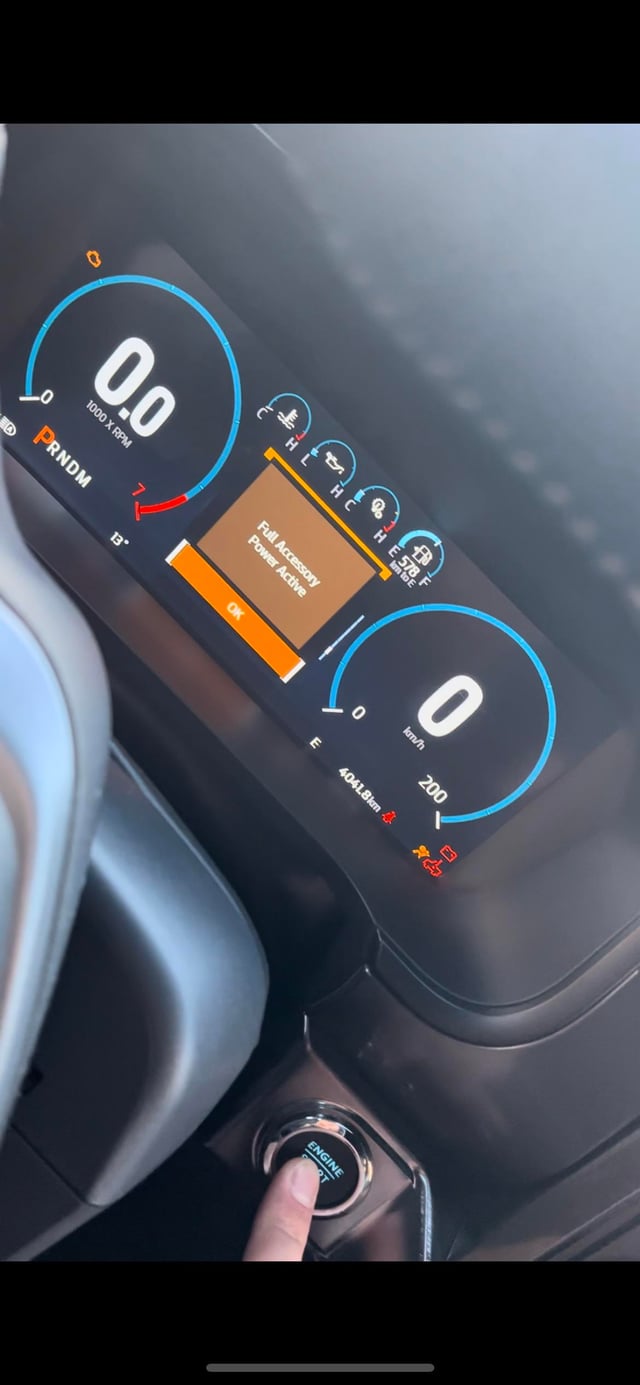
A Ford F-150 not starting is most commonly caused by a dead or weak battery, a faulty starter motor, a failed fuel pump, a bad ignition switch or push-button start module, or PATS key recognition issues. Testing the battery voltage first—then checking starter relay clicks, fuel pump priming noise, and key fob signals—can isolate the exact problem before you spend money at a shop.
Why Is My Ford F-150 Not Starting and Clicking?
A rapid clicking noise when you turn the key or push the start button almost always means the battery does not have enough amperage to engage the starter motor. The solenoid clicks but the flywheel does not turn because voltage drops below 9.6 volts under load.
1. Dead or Weak Battery
The F-150’s battery is the single most common reason the truck won’t start. EcoBoost models with auto start-stop use heavier-duty batteries, and they fail prematurely more often than owners expect.
- Measure battery voltage with a multimeter. A fully charged battery reads 12.6 volts. Below 12.2 volts means it needs charging or replacement.
- Perform a load test. Any auto parts store will do this free. A battery that reads 12.4 volts but drops below 9.6 volts under load is failing internally.
- Check for green or white corrosion on the terminals and clean them with baking soda and water.
2. Bad Starter Motor or Solenoid
If the battery tests good and you hear a single loud click or a grinding noise, the starter motor or solenoid is the likely culprit. Tap the starter housing with a hammer while someone turns the key—if it engages, the starter brushes are worn and need replacement.
Starter replacement on a 2015–2023 F-150 runs $250–$450 for the part and about two hours of labor. It is one of the more straightforward fixes.
3. Corroded Battery Ground Cable
A heavily corroded ground strap between the battery and the engine block or chassis will mimic a dead battery. Clean both ends with a wire brush and apply dielectric grease before considering further diagnosis.
Ford F-150 Cranks but Won’t Start — Fuel and Ignition Causes
When the engine cranks normally but never fires, the problem is almost always fuel delivery, spark, or a sensor signal failure preventing the PCM from commanding ignition.
1. Fuel Pump Failure
Turn the ignition to the ON position without cranking. You should hear a 2-second fuel pump prime. Silence means the pump or its relay is dead.
- Check fuel pump fuse and relay first—cheap fix before replacing the pump.
- Listen at the fuel filler neck with the gas cap open for the prime sound.
- Owners of 2015–2020 models have reported premature fuel pump failures more frequently than other model years.
2. Crankshaft Position Sensor Failure
The PCM relies on the crankshaft position sensor to fire spark plugs. If this sensor fails, the engine will crank indefinitely without starting. You will typically get a P0335 diagnostic code.
3. PATS Anti-Theft System Lockout
The Passive Anti-Theft System can prevent starting if it does not recognize the key or key fob. If the red security light on the dash blinks rapidly when you turn the key, the system is in lockout mode.
- Try a second key or key fob. A dead fob battery is the simplest cause.
- Hold the fob directly against the start button for push-button models to trigger the backup transponder.
- If the light stays on solid or blinks in a specific pattern, the system needs a dealer-level reprogram with IDS or FORScan.
Ford F-150 Push Button Start Won’t Work
On 2015 and newer F-150 models with push-button start, a no-start with no crank is commonly tied to the key fob signal, brake pedal switch, or the start button module itself.
1. Brake Pedal Switch Failure
The brake pedal switch must tell the vehicle the brake is pressed before the start button will engage. If this switch fails, nothing happens when you push the button—no crank, no click.
Press the brake pedal and listen for the relay click. If there is no click, test the brake switch with a multimeter or simply replace it—the part costs under $20.
2. Key Fob Signal Loss
Hold the fob against the steering column or start button while pressing. If the truck starts with direct contact, the fob battery is low. Replace the CR2032 or CR2450 battery depending on your model year.
3. Start Button Module or BCM Issue
If the fob and brake switch are good but the button is unresponsive, the start-stop module or Body Control Module may have failed. BCM replacement requires dealer-level programming, so this is one diagnosis you may want confirmed at a shop.
What to Check First When Your Ford F-150 Won’t Start
Follow this diagnostic sequence to avoid throwing money at parts you do not need.
- Check battery voltage — confirm at least 12.4 volts and perform a load test.
- Turn ignition to ON — listen for fuel pump prime and check dashboard lights.
- Inspect fuses and relays — starter relay, fuel pump relay, and PCM fuse under the hood.
- Try a second key or fob — rule out PATS and fob signal issues.
- Tap the starter — if it engages, the starter is failing.
- Scan for codes — even a no-crank condition can store codes in the PCM or BCM. If the problem shifts toward drivability after the truck starts, there may also be Ford F-150 transmission problems at play from a failing neutral safety switch.
Electrical gremlins that prevent starting can also affect other modules—owners have reported simultaneous radio and infotainment failures alongside no-start conditions from a weak battery or BCM communication drop.
FAQ
Can a bad alternator cause my F-150 not to start?
Yes. A failing alternator will not charge the battery while driving, so the battery slowly drains until the truck has no cranking power. Check charging voltage at the battery with the engine running—it should read between 13.5 and 14.7 volts.
Does a 2021 Ford F-150 have known no-start issues?
The 2021 redesign introduced new electronic architecture, and some owners report the truck not waking up when the key fob is nearby. A software update from the dealer resolves most of these cases.
How much does it cost to diagnose a no-start on an F-150?
Independent shops typically charge $80–$150 for a no-start diagnostic. Dealers often quote $150–$250. The actual repair cost depends entirely on the cause—a fuse might cost $5 while a fuel pump replacement runs $500–$900.
Can a blown fuse prevent the truck from starting?
Absolutely. The starter relay fuse, fuel pump fuse, and PCM power fuse are all located in the under-hood fuse box. Always check these before replacing any major component.
Final Thoughts — Fix the Right Problem the First Time
A no-start condition on the Ford F-150 is usually straightforward to diagnose if you follow a logical sequence instead of guessing. Battery, fuses, key fob, and starter should always be your first four checks—they account for the vast majority of cases.
Once those are ruled out, fuel delivery and sensor signals take over. Working through this checklist yourself saves diagnostic fees and prevents unnecessary parts replacement at the shop.
Leave a Reply