
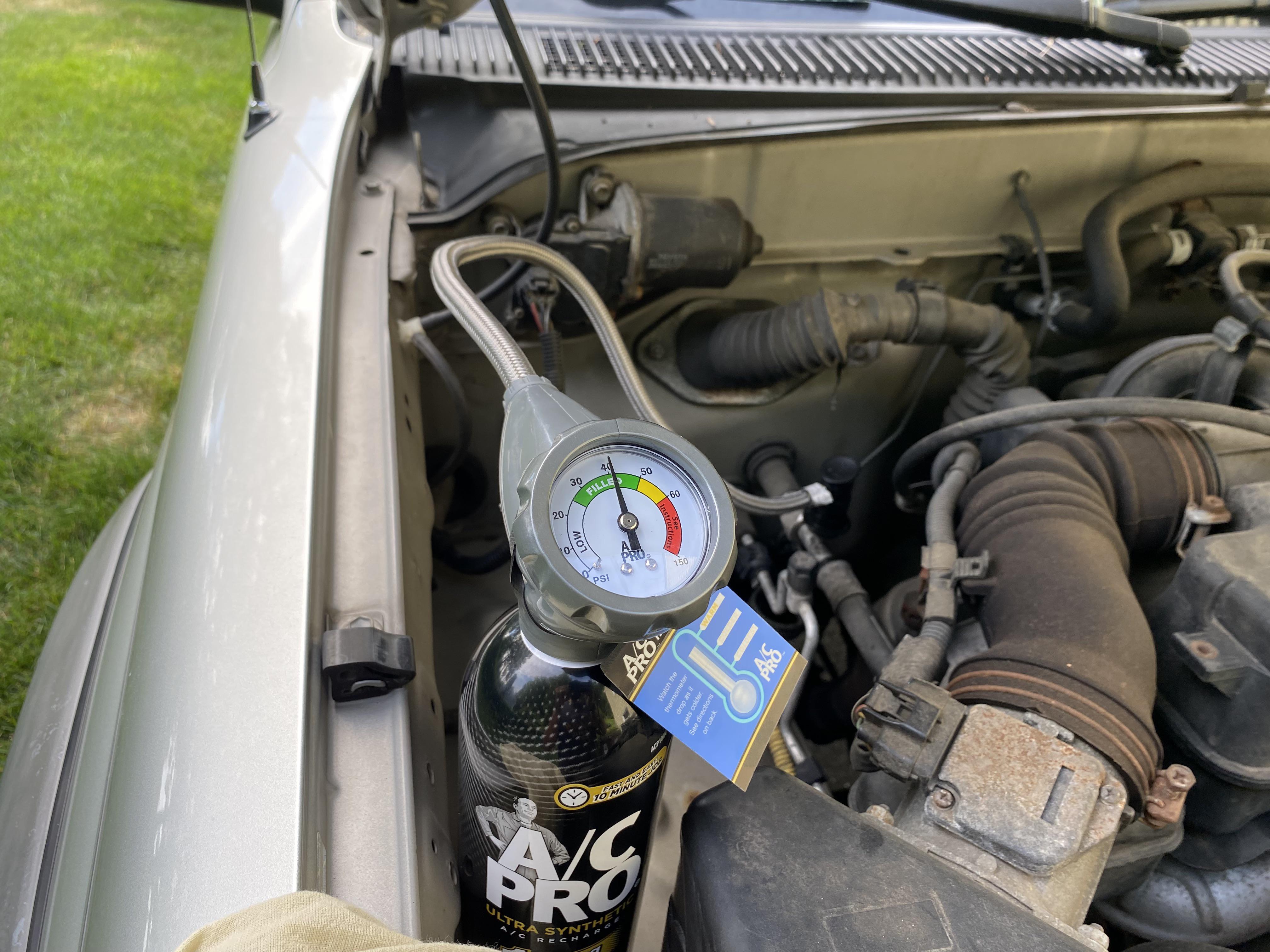
A Toyota Tacoma air conditioner not working is most commonly caused by a refrigerant leak at the condenser, a failed AC compressor clutch, a bad blend door actuator, or a blown AC fuse/relay. The quickest DIY fix is to check the cabin air filter, inspect the condenser for debris or damage, and test the compressor clutch engagement before spending money at a shop.
Why Is My Toyota Tacoma AC Not Blowing Cold Air?
Your Tacoma AC is not blowing cold air because refrigerant is not circulating properly through the system. This can happen from low refrigerant, a compressor failure, or a blocked airflow path through the evaporator core.
The Toyota Tacoma uses a standard vapor-compression AC system, but several model-specific weak points cause failures earlier than you would expect. These issues have been reported repeatedly across second and third-generation Tacoma forums and service records.
Top Causes Ranked by Frequency
- Refrigerant leak at the condenser — Road debris hits the condenser through the front bumper opening, causing slow leaks over time.
- Compressor clutch failure — The electromagnetic clutch on the compressor wears out, especially on 2005–2015 models.
- Blend door actuator failure — A small servo motor inside the dash stops moving the air door, sending warm air through the vents.
- Low refrigerant charge — A slow leak anywhere in the system drops pressure below the compressor cutoff threshold.
- Clogged cabin air filter — Restricted airflow makes the system feel like it is not cooling even when it technically is.
- Blown fuse or failed AC relay — The simplest electrical fault is often overlooked at dealerships.
Toyota Tacoma AC Blowing Hot Air — What to Check First
If your Tacoma AC is blowing hot air, start by verifying the compressor clutch is engaging when you turn the AC on. If the clutch does not spin, the problem is electrical or a low refrigerant cutoff. If the clutch spins but air stays warm, the issue is inside the refrigerant circuit or the blend door.
Step-by-Step Diagnostic Flow
- Turn the engine on and set the AC to max cold with the blower on high.
- Open the hood and look at the AC compressor pulley. The center clutch plate should visibly engage and spin with the belt.
- If the clutch is not engaging, check the AC fuse (usually 10A) in the under-hood fuse box and the magnetic clutch relay.
- If the clutch engages but air stays warm, use a manifold gauge set to check high and low side pressures.
- Low on both sides means a refrigerant leak. Normal low side with very high high side means a blockage, usually at the condenser or expansion valve.
This process eliminates the two biggest variable categories — electrical versus refrigerant — before you spend a dime. Many owners report that Toyota dealerships skip this basic test and jump straight to recommending a full system replacement, which is rarely necessary.
Toyota Tacoma AC Compressor Not Engaging — Causes and Fixes
A Tacoma AC compressor that does not engage is usually caused by low refrigerant pressure, a bad clutch relay, a blown fuse, or a failed compressor clutch coil. The compressor has a pressure switch that prevents engagement when refrigerant is too low to protect the system.
1. Low Refrigerant Pressure Cutoff
When refrigerant drops below roughly 40 psi on the low side, the pressure switch disables the compressor to prevent damage. You will hear no click from the clutch and see no rotation. The fix is to find and repair the leak, then evacuate and recharge the system with the correct amount of R-134a.
2. Failed AC Magnetic Clutch Relay
The Tacoma uses a small relay in the under-hood fuse box to power the compressor clutch coil. When this relay fails, the compressor never receives power even if everything else works. Swap it with an identical relay from another circuit to test — this is a free and immediate diagnostic.
3. Compressor Clutch Coil Failure
The electromagnetic coil inside the compressor clutch can burn out over time. Use a multimeter to check resistance across the two clutch wires.
A reading outside 3–5 ohms typically means the coil is bad. Replacing just the clutch assembly costs far less than an entire compressor.
4. Faulty AC Pressure Switch
The pressure switch sits on the high-side or low-side line and tells the computer when pressures are safe. A stuck or failed switch can falsely report low pressure and prevent the compressor from running. These switches are inexpensive and plug-in replacements.
Toyota Tacoma AC Not Cooling But Fan Blows — Blend Door and Evaporator Issues
If the fan blows air fine but it never gets cold, the most common Tacoma-specific cause is a failed blend door actuator inside the dashboard. The actuator is a small servo motor that moves a door to mix hot and cold air.
Blend Door Actuator Failure Symptoms
- Clicking or ticking noise behind the dashboard when you change temperature settings.
- Temperature stays the same regardless of what you set on the climate control.
- One side blows cold while the other blows hot on dual-zone models.
How to Test and Replace the Blend Door Actuator
- Remove the lower dash panel on the driver side by pulling out the clips.
- Locate the white or black actuator motor attached to the HVAC box.
- Unplug the electrical connector and turn the manual arm by hand. If you now get cold air, the actuator is confirmed bad.
- Replace the actuator — it is held in by two Phillips screws on most Tacoma models.
Clogged Evaporator Core
Dirt and mold can build up on the evaporator core inside the HVAC box, restricting heat exchange. This produces slightly cool air that never reaches full cold. A shop can clean the evaporator with specialized foam without disassembling the entire dash.
Toyota Tacoma AC Repair Cost — What to Expect
Tacoma AC repairs range from $50 for a simple relay or fuse fix to $1,800 for a full compressor and condenser replacement. Knowing the actual cost before you walk into a shop prevents overpayment.
| Repair | Estimated Cost (Parts + Labor) |
|---|---|
| AC relay or fuse replacement | $20 – $75 |
| Refrigerant recharge | $100 – $250 |
| Blend door actuator replacement | $150 – $350 |
| Condenser replacement | $300 – $600 |
| AC compressor clutch only | $250 – $450 |
| Full AC compressor replacement | $700 – $1,200 |
| Evaporator core replacement | $800 – $1,800 |
Independent shops typically charge 30 to 40 percent less than Toyota dealerships for the same parts. Always ask for an itemized estimate and confirm that the shop will perform a leak test before recommending a compressor replacement.
Toyota Tacoma AC Blowing Warm Air on One Side
Warm air on one side with cold air on the other indicates a dual-zone blend door issue or an uneven refrigerant charge. On 2016 and newer Tacomas with dual-zone climate control, each side has its own actuator.
Model-Specific Notes
- 2005–2015 Tacoma: Single blend door actuator is the most common failure point. Symptom is usually total warm air or a clicking sound.
- 2016–2023 Tacoma: Dual-zone actuators can fail independently. You may get cold on the driver side but warm on the passenger side.
- 2024+ Tacoma: Updated HVAC system uses electronic actuators with self-diagnostic capabilities accessible through the head unit on higher trims.
If your Tacoma also shows a blinking AC light on the dashboard, that often signals a different compressor or pressure-related issue. You can read more about that in this Toyota Tacoma AC light blinking fix guide.
How to Recharge a Toyota Tacoma AC System Yourself
Recharging the AC yourself is possible if you have a manifold gauge set or a reliable recharge kit. But you must first identify and repair the leak, or the new refrigerant will simply escape again within days.
DIY Recharge Steps
- Purchase a R-134a recharge kit with a gauge and a leak detector dye.
- Connect the gauge to the low-side service port on the accumulator near the firewall.
- Start the engine, turn AC to max, and note the low-side pressure reading.
- Add refrigerant in short bursts until the low-side reading reaches 25–35 psi at idle.
- Monitor the gauge for 15 minutes to confirm pressure holds steady.
If pressure drops again within a week, the leak is still active. Use UV dye and a black light to locate it around fittings, the condenser, and the compressor front seal.
Toyota Tacoma Condenser Damage and Replacement
The Tacoma condenser sits directly behind the grille and is vulnerable to rock strikes. A small impact can crack a tube and cause a slow refrigerant leak that eventually disables the entire system.
Signs of a Damaged Condenser
- Visible bent fins, dents, or oily residue on the front of the condenser.
- Gradual loss of cooling over weeks or months.
- UV dye visible around the front face of the condenser.
Condenser Replacement Cost and Process
Replacing the condenser on a Tacoma runs $300 to $600 at an independent shop including evacuation and recharge. The process involves removing the front bumper cover, unbolting the condenser, swapping the unit, and performing a full system evacuation and recharge.
Many Tacoma owners on forums like Toyota Tacoma reliability discussions confirm that condenser replacement is one of the most common non-drivetrain repairs on these trucks.
Toyota Tacoma AC Smells Bad — Mold and Mildew Causes
A musty smell from your Tacoma vents is caused by mold and bacteria growing on the evaporator core. The evaporator stays damp after the AC runs, creating a perfect breeding ground.
How to Eliminate AC Odor
- Replace the cabin air filter first. A dirty filter recirculates odors immediately.
- Spray an AC evaporator cleaner through the intake vents while the blower runs on high.
- Run the fan on high with the AC off for 5 minutes after every trip to dry out the evaporator.
- If the smell persists, a professional evaporator cleaning or antibacterial treatment may be needed.
This odor problem is not unique to Tacomas — owners of other Toyota models face similar issues as explained in this Toyota RAV4 AC troubleshooting guide.
Frequently Asked Questions
How do I know if my Tacoma AC compressor is bad?
Listen for grinding or squealing when the clutch engages, check for oily residue around the compressor body, and use a multimeter to test the clutch coil resistance. If the compressor turns on but does not build pressure, the internal valves are worn.
Can I drive my Tacoma without AC refrigerant?
Yes, but the compressor should not run without refrigerant because it relies on refrigerant for lubrication. If the clutch is engaging with no refrigerant, the compressor can seize quickly. Leave the AC off until the leak is fixed.
How often should I replace the Tacoma cabin air filter?
Every 12,000 to 15,000 miles or once per year. A clogged cabin filter reduces airflow, makes the AC less effective, and accelerates mold buildup on the evaporator.
Why does my Tacoma AC work when driving but not at idle?
Low refrigerant is the most common cause. At higher engine RPMs, the compressor spins faster and can still produce some cooling even with low charge. At idle, the system cannot keep up and blows warm.
Is it worth replacing just the AC compressor clutch instead of the whole compressor?
Yes, if the compressor body is mechanically sound. Clutch-only replacement saves hundreds of dollars. The clutch is a separate bolt-on component that does not require opening the refrigerant circuit.
Final Thoughts — Fixing Tacoma AC Problems the Right Way
Most Tacoma AC failures are fixable without replacing the entire system. Start with the cheapest checks — fuses, relays, cabin filter, and compressor clutch engagement — before agreeing to expensive repairs.
Find and fix leaks before recharging, and always ask any shop for evidence of a leak test before they quote a compressor. Toyota built a capable truck, but the AC system has known weak points that every owner should understand before a breakdown happens at the worst possible time.
Leave a Reply